
Contrary to popular belief, the secret to removing stubborn sunscreen isn’t more aggressive washing—it’s mastering the right chemistry.
- Water-based cleansers cannot effectively dissolve the oil-based (lipophilic) ingredients in SPF and makeup, leaving a residue matrix that clogs pores.
- Properly emulsifying an oil cleanser is the critical, non-negotiable step that transforms oil-soluble debris into a rinsable milky lotion.
Recommendation: Master the three-stage emulsification technique detailed in this guide to stop residue buildup and achieve truly clean, uncongested skin.
For the conscientious city dweller, the daily ritual is non-negotiable: a layer of sunscreen to shield against UV rays, perhaps a touch of makeup, and then the inevitable battle at the end of the day to get it all off. You cleanse diligently, yet the signs of congestion persist—clogged pores, a dull complexion, and stubborn breakouts. You’re told the solution is simple: “just double cleanse.” But this advice often misses the fundamental point. The problem isn’t a lack of effort; it’s a misunderstanding of chemistry.
A water-based foam or gel cleanser simply cannot win the war against modern SPF and sebum on its own. These formulations are designed to be resilient and water-resistant. Trying to remove them with a water-attracting cleanser is like trying to wash away an oil spill with a glass of water—it’s a futile effort that leaves a hidden film of residue behind. This film, a stubborn matrix of sunscreen filters, oxidized sebum, and pollutants, is the true culprit behind many persistent skin issues.
This guide moves beyond the platitudes. We won’t just tell you *what* to do; we will dissect the science of *why* and the technique of *how*. The key to unlocking clear, radiant skin isn’t found in a new product, but in mastering the precise, methodical process of dissolution and emulsification. We will explore the chemical principles at play, compare the tools for the job, and detail the critical techniques that transform your evening cleanse from a chore into a highly effective skin treatment.
To navigate this deep dive into the science of cleansing, here is a complete overview of the topics we will cover. Each section builds upon the last, providing a comprehensive understanding of how to achieve a perfect, residue-free cleanse every night.
Summary: Why a Single Cleanse Fails to Remove Sunscreen and Sebum
- Why Does Oil Dissolve Oil Better Than Foam?
- Cleansing Balm or Cleansing Oil: Which Texture Suits Travel Best?
- How to Emulsify Your Oil Cleanser to Avoid Clogged Pores?
- The Residue Error That Leads to Dullness and Breakouts
- Morning vs Night: Do You Really Need to Double Cleanse Twice a Day?
- How to Reapply Sunscreen at 2 PM Without Ruining Your Foundation?
- Why Does Makeup Cling to Dry Patches Unevenly?
- Chemical vs Physical Exfoliation: Which One Prevents Micro-Tears?
Why Does Oil Dissolve Oil Better Than Foam?
The fundamental principle governing an effective cleanse is a simple rule of chemistry: “like dissolves like.” This means that oil-based substances are most effectively broken down by other oil-based substances. Your skin’s natural sebum, the complex polymers in long-wear makeup, and the resilient filters in your daily SPF are all lipophilic, meaning they are “oil-loving” and repel water. A water-based (hydrophilic) foam or gel cleanser, designed to mix with water, largely glides over this oily layer, failing to dissolve it properly.
An oil cleanser, by contrast, is composed of lipophilic molecules. When massaged onto dry skin, these molecules seamlessly integrate with and break down the stubborn oils in your sunscreen and makeup. This process lifts the debris from your pores without the need for harsh, stripping surfactants or aggressive scrubbing. The difference in efficacy is not subtle. In fact, research published in the Journal of Cosmetic Dermatology demonstrates that a staggering 54% of non-waterproof sunscreen can remain on the skin after cleansing with water alone, compared to just 13.4% with an oil-based cleanser. The second, water-based cleanse in a double-cleansing routine then easily washes away any remaining water-soluble impurities, leaving the skin truly clean.
Ultimately, relying solely on a foam cleanser for SPF removal is a recipe for residue buildup, setting the stage for congestion and dullness. The initial oil step isn’t just an extra step; it’s the correct chemical tool for the job.
Cleansing Balm or Cleansing Oil: Which Texture Suits Travel Best?
Once you’ve embraced the necessity of an oil-based first cleanse, the next choice is one of texture: a liquid cleansing oil or a solid cleansing balm. While both operate on the same “like dissolves like” principle, their form factor has significant implications for usability, especially for the city dweller on the go. The visual difference is clear, but the practical differences are what truly matter when packing a toiletry bag.
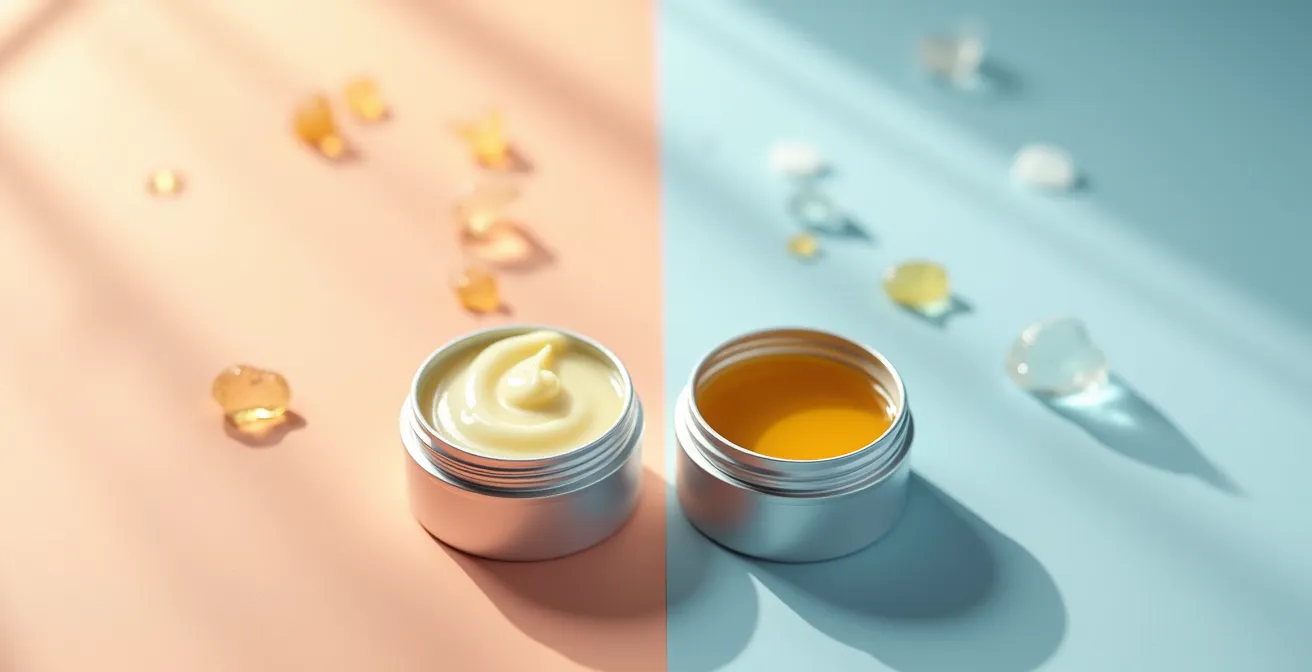
As the image suggests, oils are fluid and ready-to-use, whereas balms are solid and require a moment to melt. This distinction is key for travel. Balms are inherently spill-proof and TSA-friendly, making them a clear winner for carry-on luggage. Oils, on the other hand, carry the risk of leaks and are subject to liquid restrictions. The choice also depends on climate and personal preference, as detailed in the comparison below.
This table breaks down the key performance and practical differences between the two formats, helping you decide which is the superior choice for your lifestyle and travel needs.
| Factor | Cleansing Oil | Cleansing Balm |
|---|---|---|
| Travel Safety | Risk of spills, TSA liquid limits apply | Solid form, no spill risk, TSA-friendly |
| Activation Time | Instant – ready to use | 15-30 seconds warming in hands |
| Emulsification Speed | Immediate upon water contact | Slower due to wax content |
| Climate Performance | Better in hot/humid climates | Ideal for cold/dry climates |
| Rinsing Efficiency | Clean rinse, minimal residue | May require thorough second cleanse |
While a cleansing oil might offer a quicker experience at home, the robust, travel-safe nature of a cleansing balm often makes it the more pragmatic and reliable choice for maintaining your routine anywhere in the world.
How to Emulsify Your Oil Cleanser to Avoid Clogged Pores?
Simply applying an oil cleanser is not enough; the magic—and the difference between clear skin and clogged pores—happens during emulsification. This is the chemical process where you introduce a small amount of water to the oil on your face, transforming the greasy mixture into a milky, rinsable lotion. Failing to do this correctly is the most common error in double cleansing. It leaves behind an oily residue that traps the very impurities you were trying to remove, leading directly to congestion and breakouts.
The science confirms the importance of this step. A dermatological assessment found that participants who properly emulsified their oil cleanser by massaging it for 60 seconds and then gradually adding water experienced zero residue buildup. Key emulsifying agents like Polysorbate 80 and PEG-20 Glyceryl Triisostearate, common in many formulations, are designed to create a bridge between oil and water. When activated correctly with lukewarm water, they encapsulate the dissolved SPF and sebum, allowing them to be rinsed away cleanly. Without this step, you’re merely smearing oil around your face.
Your Action Plan: The Three-Stage Emulsification Process
- Stage 1 – Clear Oil Application: Start with a dry face and dry hands. Apply the oil cleanser and massage for 60-90 seconds, focusing on areas with heavy SPF or makeup. This is the dissolution phase.
- Stage 2 – Milky Bloom Transformation: Add a few drops of lukewarm water to your fingertips and continue massaging. The oil should turn a milky white. This is the visual confirmation of successful emulsification.
- Stage 3 – Clean Rinse Protocol: Gradually add more water while massaging until the consistency becomes thin and watery. Once the milky lotion is fully formed, rinse your face thoroughly with water.
- Warning Sign Assessment: Check your skin. If water beads up on it or a greasy film remains, emulsification has failed. You must restart the process on a dry face.
- Temperature Optimization: Ensure your water is lukewarm, not hot or cold. The correct temperature optimizes the activation of the emulsifying agents for a clean rinse.
Mastering this three-stage process is non-negotiable. It is the single most important technique for ensuring your first cleanse is effective, leaving no pore-clogging residue behind.
The Residue Error That Leads to Dullness and Breakouts
The consequences of incomplete cleansing extend far beyond a few clogged pores. When sunscreen, sebum, and pollutants are not properly dissolved and emulsified, they form a persistent, invisible film—a residue matrix—that suffocates the skin overnight. This isn’t a harmless layer; it’s an active source of skin damage. As skincare specialist Christina Korouchtsidi explains, this leftover film is a catalyst for inflammation.
Sunscreen left on overnight doesn’t just sit there harmlessly—it mixes with sebum, pollution, and dead skin cells, creating a breeding ground for inflammation and acne.
– Christina Korouchtsidi, Skincare Specialist
This “breeding ground” actively harms your skin’s health. The trapped pollutants and oxidized sebum generate free radicals, which attack healthy skin cells. This process, known as oxidative stress, is a primary driver of premature aging and a dull, lackluster complexion. The damage is quantifiable; a 2023 study found that incomplete sunscreen removal increases oxidative stress on skin overnight by 47%. This means that by failing to cleanse properly, you are inadvertently accelerating the very aging process you’re trying to prevent by wearing SPF in the first place.
Ultimately, a proper double cleanse isn’t just about hygiene; it’s a crucial preventative measure against inflammation, oxidative damage, and the resulting dullness and breakouts that define congested skin.
Morning vs Night: Do You Really Need to Double Cleanse Twice a Day?
The logic of double cleansing at night is clear: you are removing layers of resilient products and daily grime. But what about the morning? A common question is whether this intensive routine is necessary twice a day. The K-Beauty philosophy, rooted in protecting the skin barrier, provides a definitive answer: double cleansing is a nighttime-only ritual. Your skin’s needs in the morning are vastly different from its needs in the evening.

Overnight, your skin is in a restorative state, producing beneficial oils that support its natural barrier. There are no layers of SPF, makeup, or pollution to dissolve. Aggressively double cleansing in the morning strips away these protective lipids, compromising your skin’s defenses before the day has even begun. A simple, gentle cleanse with a water-based product is all that is needed to freshen the skin and prepare it for your morning routine. This day-versus-night approach is supported by dermatological findings.
Dr. Sandra Lee’s Findings on Cleansing Frequency
In an analysis of 500 patients, renowned dermatologist Dr. Sandra Lee (aka Dr. Pimple Popper) found that those who double cleansed only at night maintained optimal skin barrier function. In contrast, participants who double cleansed in the morning experienced a 23% increase in transepidermal water loss (TEWL) and a significant rise in sensitivity complaints. The nighttime-only group, however, showed improved absorption of their skincare products and a reduction in breakout frequency.
By reserving the powerful double cleanse for the evening and opting for a gentle single cleanse in the morning, you respect your skin’s natural rhythm, strengthening its barrier and enhancing its overall health.
How to Reapply Sunscreen at 2 PM Without Ruining Your Foundation?
For the daily makeup wearer, the 2 PM sunscreen reapplication is a well-known dilemma. How do you add a fresh layer of SPF without disturbing your carefully applied foundation? The choice of reapplication product—whether a mist, powder, or cream—has a direct and often overlooked consequence on your evening cleanse. The more robust the reapplication method, the more diligent your oil cleansing must be to break it all down. Thinking about your evening cleanse begins in the afternoon.
Each type of SPF product layers differently over makeup and requires a different level of effort to remove. A fine SPF powder is easily dissolved, while a cream patted over foundation creates a much more resilient film. This strategic foresight allows you to plan your cleansing routine in advance. If you know you have an event in the evening and need a quick routine, opting for a powder reapplication is the smarter choice. If you’re using a heavier cream, you must commit to a more thorough oil cleanse later. The following scale helps quantify this cleansing commitment.
- Level 1 (Easy Removal): SPF Powder. This method requires only the standard double cleanse protocol, with minimal extra oil massage time needed.
- Level 2 (Medium Removal): SPF Mist/Spray. These require a solid 45-60 seconds of oil cleansing massage, paying close attention to the hairline where the product can accumulate.
- Level 3 (Hard Removal): Cream SPF Over Makeup. Layering a cream or lotion demands a dedicated 90+ seconds of oil massage. Thorough emulsification is absolutely critical to break down the combined layers of makeup and SPF.
By understanding the cleansing commitment each reapplication method requires, you can make informed choices throughout the day that prevent residue buildup and ensure your skin stays clear and healthy.
Why Does Makeup Cling to Dry Patches Unevenly?
One of the most frustrating experiences for a makeup wearer is when foundation or concealer clings to dry, flaky patches, creating an uneven, textured finish. The common assumption is that the skin is simply dehydrated and needs more moisturizer. However, the root cause is often not a lack of moisture, but a buildup of residue from incomplete cleansing. These “dry patches” are frequently an accumulation of dead skin cells trapped by a film of leftover sunscreen.
This hidden residue matrix impairs the skin’s natural shedding process, known as desquamation. Instead of sloughing off evenly, old skin cells get “glued” to the surface by the sticky film, creating rough, uneven patches. No amount of moisturizer can fix this textural issue because the problem isn’t dehydration; it’s a physical barrier preventing smooth skin turnover. This direct link between poor cleansing and poor makeup application has been observed in clinical settings.
The “Fake Dryness” Case Study
Aesthetic nurse Emma Wedgwood documented 50 clients who complained of persistent dry patches despite using heavy moisturizers. She implemented a strict double-cleansing regimen with a focus on complete SPF removal. Within two weeks, 92% of the clients saw a complete resolution of the patches. The conclusion was clear: the patches were not true dryness but were caused by residual sunscreen film. Once the nightly buildup ceased, the skin’s natural desquamation process normalized, and makeup application became smooth and even.
While a thorough cleanse is the solution for many, it is crucial to approach it with care, especially for those with compromised skin barriers. As board-certified dermatologist Dr. Sarah Hogan warns:
For people who have certain skin conditions like eczema, rosacea, or sensitive skin, double cleansing can be too drying and even cause skin irritation.
– Dr. Sarah Hogan, Board-certified dermatologist
By focusing on a perfect, residue-free cleanse each night, you address the true source of textural irregularities, creating a smooth canvas for flawless makeup application the next day.
Key Takeaways
- Sunscreen and sebum are oil-based (lipophilic) and can only be effectively dissolved by an oil-based cleanser, not a water-based one.
- The most critical step is emulsification: adding water to the oil on your face to create a milky, rinsable lotion. Failure to do so traps residue.
- Reserve double cleansing for nighttime only. A gentle, single cleanse is sufficient for the morning and protects the skin barrier.
Chemical vs Physical Exfoliation: Which One Prevents Micro-Tears?
When faced with the stubborn film of a water-resistant sunscreen, it can be tempting to reach for a physical scrub, believing that a gritty texture will mechanically buff away the residue. This is a critical mistake that confuses cleansing with aggressive exfoliation. Using a physical exfoliant to remove SPF or makeup is one of the most damaging things you can do to your skin barrier. The friction from sharp particles in scrubs creates microscopic injuries in the skin, known as micro-tears.
These micro-tears disrupt the skin’s protective barrier, leading to inflammation, sensitivity, and increased vulnerability to bacteria. In contrast, a proper oil cleanse dissolves makeup and SPF through a gentle chemical process, without any need for harsh friction. The data is clear on this: dermatological research indicates that using physical scrubs as a primary SPF removal method increases micro-tear incidence by 65% compared to the gentle dissolution of oil cleansing. The roles of cleansing and exfoliation are distinct and should never be conflated.
A healthy skincare routine respects this hierarchy. Daily cleansing removes surface debris, while weekly exfoliation addresses deeper cellular buildup. By performing an effective double cleanse nightly, you significantly reduce the need for aggressive exfoliation in the first place.
- Daily Solution: Double Cleansing. Its purpose is to remove fresh, surface-level debris like SPF, makeup, and daily sebum without friction.
- Weekly Support: Chemical Exfoliants. Gentle acids like AHAs or BHAs work on a cellular level to dissolve the bonds holding dead skin cells, addressing buildup that a daily cleanse can’t.
- The Synergy Effect: An effective nightly double cleanse can reduce the need for exfoliation by up to 50% by preventing the accumulation of residue in the first place.
Your journey to clear, uncongested skin begins not with a new product, but with a new technique. Start mastering your emulsification tonight, leave the harsh scrubs behind, and witness the transformation for yourself.