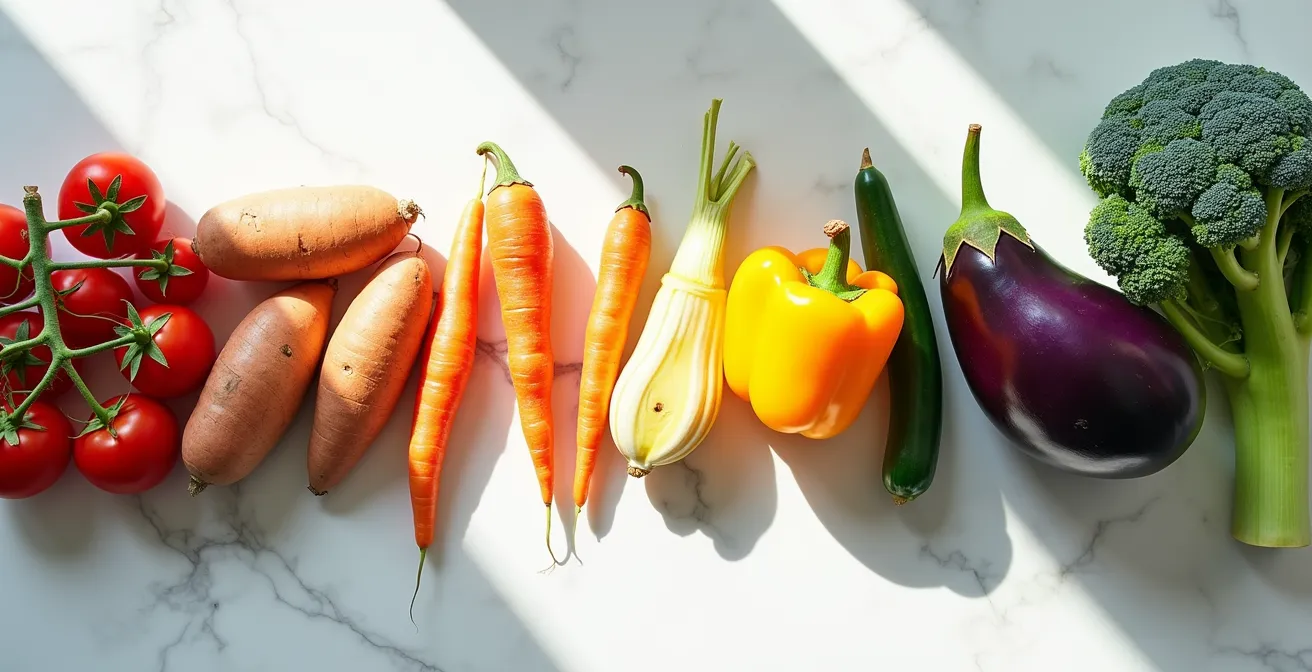
The real power of “eating the rainbow” isn’t in collecting colors, but in orchestrating nutritional synergy to build profound, resilient health.
- Nutrient diversity is more critical than fixating on a single “superfood,” as it cultivates a healthy and resilient gut microbiome.
- Combining specific foods (like iron and vitamin C sources) and timing your meals (like carbs in the morning) can dramatically amplify nutrient absorption and energy.
Recommendation: Shift your focus from what single foods do to how they work together. Your plate is an orchestra, and you are the conductor.
You’ve heard it a thousand times: “eat the rainbow.” It’s a piece of advice so common it has become almost meaningless, a colorful platitude we nod along to without grasping its true significance. We dutifully add a red pepper here, a handful of spinach there, believing we’ve checked the “healthy eating” box for the day. This approach often treats food like a paint-by-numbers canvas, focusing only on adding splashes of color for aesthetic appeal.
But this superficial view misses the profound biological masterpiece waiting to be created. The common advice focuses on what colors to eat, but rarely delves into the *why* or the *how*. It doesn’t explain the intricate dance of phytonutrients, the teamwork between vitamins and minerals, or the critical role that variety plays in cultivating a thriving internal ecosystem. We’ve been told to eat a rainbow, but nobody taught us how to conduct the symphony.
What if the real secret wasn’t just about the presence of different colors on your plate, but about the nutritional synergy they create when they interact? What if the goal wasn’t to simply consume nutrients, but to orchestrate a complex biological harmony that builds immunity from the ground up? This is where the cliché transforms into a powerful health strategy. It’s about understanding that the combination of foods can be exponentially more powerful than any single ingredient in isolation.
This guide will take you beyond the surface-level advice. We will explore how to unlock the hidden power of your plate by moving from a mindset of “collecting colors” to one of “choreographing” your nutrition. You’ll learn how to pair foods for maximum absorption, why eating the same “superfood” daily can be counterproductive, and how the timing of your meals can transform your energy. Prepare to see your plate not as a collection of items, but as a vibrant, interconnected system for building true, lasting resilience.
To help you navigate this journey from cliché to strategy, this article is structured to reveal the deeper layers of rainbow eating. The following sections will guide you through the science and art of creating a diet that truly nourishes and protects.
Summary: Your Guide to a Truly Vibrant Immune System
- Empty Calories vs Nutrient Dense: How to Spot the Difference on Labels?
- How to Pair Iron-Rich Foods to Absorb 3x More Nutrients?
- The Danger of Eating the Same “Superfood” Every Single Day
- How to Find Nutrient-Dense Foods in the Dead of Winter?
- When to Eat Carbohydrates for Maximum Energy Without the Crash?
- What Do Free Radicals Actually Do to Collagen Fibers?
- Fresh vs Frozen Vegetables: Which Is More Nutritious in Winter?
- Chicken Breast vs Tofu: Which Protein Source Builds Muscle Faster?
Empty Calories vs Nutrient Dense: How to Spot the Difference on Labels?
In our modern food landscape, it’s easy to be misled. A label might shout “low-fat” or “fortified with vitamins,” but these phrases often mask a nutritionally barren product. These are what we call “empty calories”—foods that provide energy but little of the essential micronutrients, fiber, and phytonutrients your body craves. The real measure of a food’s worth isn’t its calorie count, but its nutrient density: the amount of beneficial nutrients per calorie.
While labels provide some information, a naturopathic approach encourages you to become a food detective using a much more intuitive tool: your eyes. Color is nature’s own labeling system. The vibrant reds, deep purples, and brilliant greens in produce are not just for show; they are the external signatures of a rich internal world of phytonutrients. These compounds are the plant’s own immune system, and when we consume them, they extend their protective benefits to us.
A beige-colored plate of pasta, bread, and chicken is a world away from a vibrant dish teeming with red tomatoes, green kale, and orange sweet potatoes. The former may fill you up, but the latter truly nourishes you, providing a complex array of antioxidants and anti-inflammatory compounds that a vitamin-fortified cereal box simply cannot replicate. Learning to see food through the lens of color is the first step toward reclaiming your nutritional wisdom and making choices that build health from the inside out.
Your Action Plan for a Chromatic Plate Audit
- Create colorful salads with a mix of leafy greens, shredded carrots, cherry tomatoes, red cabbage, and sliced bell peppers for maximum phytonutrient diversity.
- Add colorful herbs and spices like turmeric, paprika, and parsley to dishes for both color and a nutritional boost beyond what labels show.
- Rotate your favorite vegetables with similar options in other colors (e.g., swap red bell peppers for yellow or green ones) to ensure a wider nutrient range.
- Use colorful fruits in desserts like strawberries, blackberries, and kiwi for natural sweetness and extra nutrients instead of fortified products.
- Try a new recipe each week featuring a different color theme, such as an orange-themed stir-fry with sweet potatoes and carrots.
How to Pair Iron-Rich Foods to Absorb 3x More Nutrients?
Here is where the concept of nutritional synergy truly comes to life. Your body’s ability to use a nutrient is often dependent on the company it keeps. Iron is a perfect example. There are two types of dietary iron: heme iron (found in animal products) and non-heme iron (found in plants like lentils, spinach, and beans). Non-heme iron is notoriously more difficult for the body to absorb on its own.
However, when you pair these plant-based iron sources with foods rich in Vitamin C, a beautiful biochemical partnership occurs. Vitamin C acts as a key, unlocking the non-heme iron and transforming it into a form that your body can easily absorb—increasing uptake by up to three times or more. This is synergy in action. It’s not just about eating spinach; it’s about eating spinach with a squeeze of lemon juice, or lentils with chopped red bell peppers.

This principle is a cornerstone of building robust health. As confirmed by Mayo Clinic, this strategic pairing is a powerful way to optimize your nutrient intake without simply eating more. Their implementation of a “rainbow diet” highlights that research demonstrates that orange and yellow fruits and vegetables containing carotenoids significantly boost the immune system. They specifically recommend pairing iron with Vitamin C sources to maximize absorption, advising that a truly effective meal contains two to three different colors working in concert. This isn’t about just eating healthy foods; it’s about making them work smarter for you.
The Danger of Eating the Same “Superfood” Every Single Day
The wellness world loves to crown a new “superfood” every few months. From kale to quinoa, we’re encouraged to find that one magic bullet and consume it religiously. While these foods are undoubtedly nutritious, this laser-focus on a single ingredient creates a dangerous nutritional monoculture. It’s the antithesis of the rainbow principle and can inadvertently weaken the very foundation of your health: your gut microbiome.
Your gut is home to trillions of bacteria, a diverse ecosystem that governs everything from your immunity to your mood. This diversity is key to its resilience. Different species of beneficial bacteria have different dietary preferences; they thrive on different types of fiber and phytonutrients. When you only eat a narrow range of foods—even “healthy” ones—you are essentially feeding only a select few species, while starving countless others. This is the opposite of the microbiome choreography we aim for.
Different types of fiber from different plants feed different species of gut bacteria. Eating the same ‘superfood’ daily starves the other beneficial species, reducing gut diversity and resilience against pathogens.
– Dr. Sarah Ballantyne, PhD, Nutrivore Research on Dietary Diversity
This lack of diversity is a modern problem. A striking study reveals that modern diets now rely on just 100 plant species for food, a drastic drop from the estimated 3,000+ species consumed by our hunter-gatherer ancestors. True immune strength comes not from one superfood, but from a broad coalition of nutrients from a wide variety of colorful plants. The goal is to cultivate a vibrant, diverse internal garden, not a single, lonely crop.
How to Find Nutrient-Dense Foods in the Dead of Winter?
When winter arrives, the vibrant bounty of summer farmers’ markets can feel like a distant memory. The produce aisles shrink, and it’s easy to fall into a rut of beige, comforting foods. However, eating the rainbow is a year-round commitment, and with a little strategy, winter can be just as nutritionally vibrant. The key is to expand your definition of “fresh” and embrace the pantry.
First, focus on winter’s own rainbow. Hardy root vegetables like carrots, beets, and sweet potatoes are not only seasonal but are also excellent storehouses of nutrients, retaining their potency for months. Deeply colored winter squashes, purple cabbage, and dark leafy greens like kale thrive in the cold and offer a wealth of vitamins and antioxidants. These are your winter fresh-food staples.
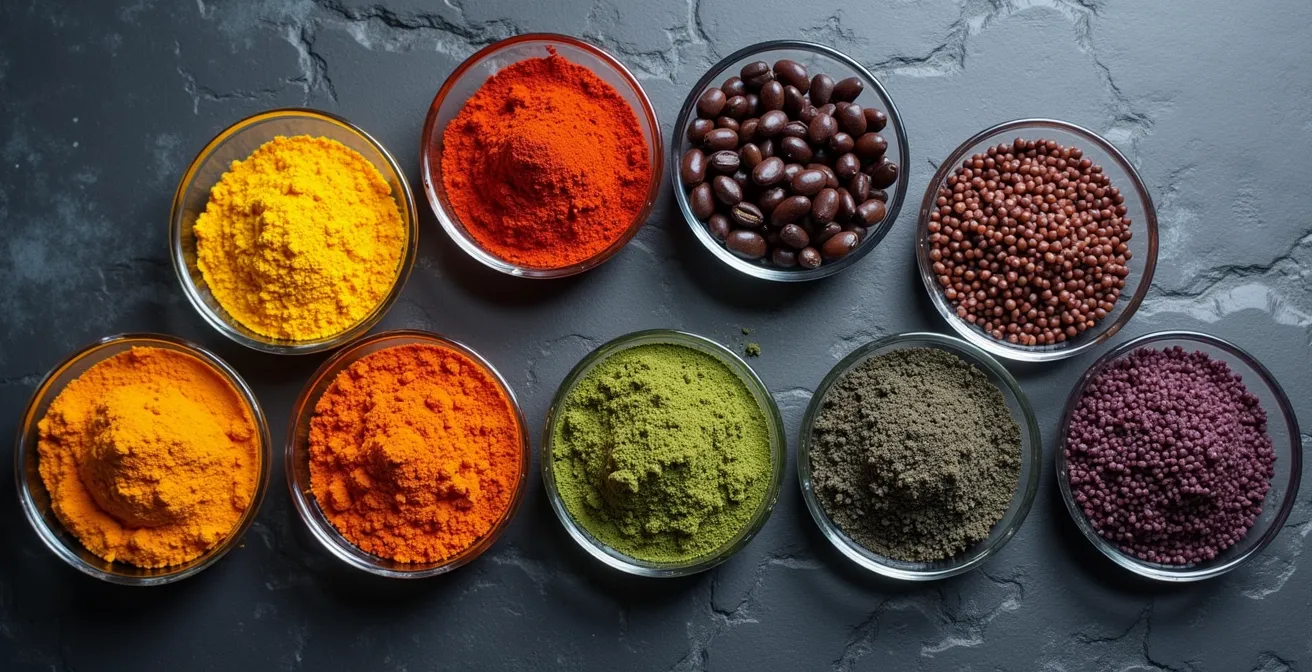
Second, unlock the power of your pantry and freezer. Colorful dried spices like golden turmeric and red paprika, along with legumes like black beans and red lentils, provide a spectrum of color and nutrients. Furthermore, frozen fruits and vegetables are fantastic winter allies. Picked at their peak ripeness and flash-frozen, they often lock in more nutrients than “fresh” produce that has traveled for weeks to reach the store. Embracing frozen berries, peas, and spinach is a smart and economical way to keep your plate colorful and your body nourished until spring returns.
When to Eat Carbohydrates for Maximum Energy Without the Crash?
Nutritional synergy isn’t just about what you eat, but also *when* you eat it. Your body operates on a natural 24-hour cycle known as the circadian rhythm, which influences everything from sleep to hormone production. This internal clock also affects how you metabolize food, particularly carbohydrates. Aligning your carb intake with this rhythm is a powerful way to maximize energy and avoid the dreaded afternoon slump.
Functional medicine research indicates that insulin sensitivity is naturally higher in the morning and gradually decreases throughout the day. Insulin is the hormone responsible for shuttling glucose (from carbs) out of your bloodstream and into your cells for energy. When you’re more sensitive to insulin, your body handles carbohydrates more efficiently, leading to stable energy. When sensitivity is lower, as it is in the evening, carbs are more likely to cause blood sugar spikes and be stored as fat.
This means the best time to consume the bulk of your healthy, complex carbohydrates is in the earlier part of the day. A morning meal of oats with red berries or a lunch with quinoa and colorful vegetables provides sustained fuel for the hours ahead. In the evening, it’s wiser to focus on fiber-rich carbs from leafy greens and non-starchy vegetables to promote stable blood sugar overnight. By timing your carbs correctly, you work with your body’s natural biology, not against it.
This comparative table shows how to strategically time your carbohydrate intake by pairing it with colorful foods for optimal energy management throughout the day.
| Time of Day | Best Carb Sources | Color Foods to Pair | Energy Impact |
|---|---|---|---|
| Morning | Complex carbs (oats, quinoa) | Red berries, orange citrus | Sustained energy 4-6 hours |
| Pre-workout | Moderate GI carbs | Yellow banana, orange sweet potato | Quick energy boost |
| Post-workout | Mixed carbs + protein | Purple grapes, green vegetables | Recovery without crash |
| Evening | Minimal, fiber-rich carbs | Green leafy vegetables, white cauliflower | Stable blood sugar overnight |
What Do Free Radicals Actually Do to Collagen Fibers?
To truly appreciate the power of a colorful diet, we need to zoom in to the cellular level. Our bodies are constantly under attack from unstable molecules called free radicals. Generated by factors like pollution, stress, and UV radiation, these molecules are like tiny vandals, causing damage—known as oxidative stress—to our cells. One of their primary targets is collagen.
Collagen is the most abundant protein in our body, forming the structural framework for our skin, joints, and connective tissues. It’s what keeps our skin firm and youthful. Free radicals attack collagen fibers, causing them to break down, cross-link, and become stiff. This process, called glycation, visibly manifests as wrinkles, sagging skin, and can contribute to joint stiffness. It is a direct, physical assault on your body’s structural integrity.
This is where the rainbow warriors—phytonutrients—enter the scene. They act as a molecular shield, neutralizing free radicals before they can cause damage. The phytonutrients in red foods are particularly powerful protectors. As the Mayo Clinic Nutrition Department explains, “Red foods contain lycopene, which improves heart health… Lycopene acts as a molecular shield against UV-induced free radicals that damage collagen.” Eating a diet rich in colorful plant foods is like deploying a highly-trained army of bodyguards to protect your cellular structure from daily attacks, preserving your skin’s vitality and your body’s resilience from the inside out.
Fresh vs Frozen Vegetables: Which Is More Nutritious in Winter?
There’s a deeply ingrained belief that “fresh is always best.” We often view frozen vegetables as a pale imitation of their fresh counterparts, a compromise made for convenience. However, when it comes to nutrition, especially during the long winter months, this assumption can be misleading. The journey from farm to plate can be a long one for “fresh” produce, and time is the enemy of nutrients.
Vegetables begin to lose vitamins and minerals the moment they are harvested. Produce that travels thousands of miles over several days or weeks to reach your grocery store may have lost a significant portion of its nutritional value by the time you eat it. In contrast, vegetables destined for the freezer are typically picked at their absolute peak of ripeness—the point of maximum nutrient content—and are flash-frozen within hours. This process acts like a nutritional pause button, locking in vitamins, minerals, and precious phytonutrients.
Harvard Health’s Analysis of Frozen vs Fresh Produce
This very question was tackled by researchers at Harvard Medical School. Their analysis confirms that frozen produce is a powerful nutritional ally. The study concludes that frozen fruits and vegetables are just as nutritious as fresh ones, and in many cases, even more so. They found that the phytonutrients responsible for the vibrant colors—and many of the health benefits—remain incredibly stable in frozen vegetables. This means that a bag of frozen berries in January can offer more antioxidant power than fresh berries that have journeyed from another hemisphere.
The takeaway is clear: the true goal is maximum nutrition, not blind adherence to the “fresh” label. During winter, a smart strategy involves a mix of hardy, local fresh vegetables and a freezer stocked with a vibrant array of frozen produce. This ensures your plate remains a diverse, nutrient-dense rainbow all year long.
Key Takeaways
- Synergy Over Singularity: The combined effect of different nutrients working together is more powerful than any single “superfood.”
- Choreograph Your Microbiome: A wide variety of plant fibers from different colored foods is essential for cultivating a diverse and resilient gut ecosystem.
- Timing is a Nutrient: Aligning your carbohydrate intake with your body’s natural circadian rhythm maximizes energy and minimizes crashes.
Chicken Breast vs Tofu: Which Protein Source Builds Muscle Faster?
The debate between animal and plant-based protein is often reduced to a simple numbers game: which has more grams of protein? For someone looking to build muscle, chicken breast might seem like the obvious winner. But this narrow view completely misses the bigger picture—the one illuminated by the principles of eating the rainbow. The most effective protein source is not just about the protein itself, but about the entire nutritional package it comes in and how it interacts with your body.
A more holistic and accurate measure is the “inflammatory footprint” of a food. Intense exercise, which is necessary for muscle growth, naturally creates inflammation. Your body needs to manage this inflammation effectively to repair and build muscle tissue. This is where phytonutrients from colorful plants play a starring role. They are potent anti-inflammatory agents and act as essential co-factors for muscle synthesis. Without them, the protein you consume cannot be used as efficiently.
This is the essence of nutritional synergy, a concept beautifully articulated by Dr. Deanna Minich, a leading expert in functional nutrition.
The inflammatory footprint matters more than protein content alone. Phytonutrients from colorful vegetables act as co-factors for muscle synthesis – zinc from red foods, magnesium from greens, and antioxidants from purple foods manage exercise-induced inflammation, making any protein source more effective.
– Dr. Deanna Minich, PhD, The Rainbow Diet: Functional Medicine Approach
From this perspective, the question is no longer “chicken or tofu?” Instead, it becomes “how can I support my protein source with a symphony of colorful phytonutrients?” Whether you choose chicken or tofu, its muscle-building potential is dramatically enhanced when served alongside a vibrant array of vegetables. The protein provides the bricks, but the rainbow provides the essential construction crew to get the job done.
Start building your own nutritional symphony today. By shifting your focus from collecting colors to orchestrating synergy, you transform every meal into a powerful act of self-care and a step toward profound, resilient health.