
The debate isn’t about which molecule is “better,” but understanding their distinct mechanisms to strategically accelerate cell turnover.
- Retinol directly stimulates retinoic acid pathways for powerful but potentially irritating renewal.
- Bakuchiol offers a multi-pathway approach, providing antioxidant and anti-inflammatory benefits with less risk, making it a key strategic ally.
Recommendation: Instead of choosing one, learn to cycle them synergistically. Use antioxidants like Bakuchiol in the AM to protect and Retinol in the PM for repair, based on your skin’s tolerance.
The quest for smoother, more radiant skin inevitably leads to a single, crucial biological process: cell turnover. As we age, this natural renewal cycle slows, leading to dullness, fine lines, and uneven texture. In response, the skincare world has presented a high-stakes duel between two powerhouse molecules: Retinol, the long-reigning gold standard, and Bakuchiol, its popular plant-derived challenger. Consumers are often told they must choose between Retinol’s proven power and Bakuchiol’s celebrated gentleness, especially if they have sensitive skin or fear the dreaded “purge.”
This binary choice, however, is a vast oversimplification. It overlooks the fundamental science of how these ingredients interact with our skin at a cellular level. The most effective anti-aging strategy doesn’t come from picking a side, but from a deeper, mechanistic understanding. What if the key wasn’t choosing one *over* the other, but knowing *how*, *why*, and *when* to use each one for maximum efficacy and minimal disruption to your skin’s barrier integrity?
This guide moves beyond the rivalry. We will dissect the science of cell turnover, differentiate between purging and a true breakout, and provide expert-level strategies for integrating these molecules into your routine. By understanding their unique pathways, you can stop guessing and start building a resilient, visibly renewed complexion.
Table of Contents: A Scientific Guide to Retinol, Bakuchiol, and Cell Turnover
- Why Does Cell Turnover Slow Down Drastically After Age 30?
- How to Tell If Your Dullness Is Due to Dead Skin or Dehydration?
- How to Differentiate Between Retinol Purging and a Breakout?
- How to Apply Retinol Without Irritation Using the Sandwich Method?
- Tretinoin vs Over-the-Counter Retinol: Is Stronger Always Better?
- When to Increase Retinol Frequency: The 3-Month Rule
- AM or PM: When Is the Best Time to Apply Antioxidants for Protection?
- Why Is Vitamin C Unstable and How Does It Affect Your Glow?
Why Does Cell Turnover Slow Down Drastically After Age 30?
Cell turnover, or desquamation, is the continuous process where the skin produces new cells in its deepest layer (the stratum basale), which then migrate to the surface and shed. This renewal cycle is what keeps the complexion fresh, smooth, and radiant. In our youth, this process is highly efficient. However, after the age of 30, a significant biological shift occurs, causing a marked deceleration in this crucial function.
The primary metric for this slowdown is the “stratum corneum transit time”—the time it takes for a new cell to travel from the bottom to the top and slough off. Foundational research published in PubMed reveals that this transit time increases from approximately 20 days in young adults to over 30 days in older adults. This 50% increase means dead cells linger on the surface for much longer. This slowdown is not due to a single factor but a cascade of intrinsic aging processes, including decreased metabolic activity in skin cells, reduced production of essential growth factors, and cumulative environmental damage from UV radiation and pollution.
This prolonged retention of dead keratinocytes on the surface has direct visual consequences. It obstructs the reflection of light, leading to a dull, lackluster appearance. The buildup creates a rougher, uneven surface texture and can clog pores, potentially leading to congestion. Furthermore, it can impede the penetration and efficacy of topical skincare products, as they must first get through this layer of inert cells. Understanding this fundamental slowdown is the first step in creating a targeted strategy to counteract its effects. Actives like retinoids and bakuchiol are effective precisely because they directly intervene in this process, signaling the skin to resume a more youthful rate of cellular pathway stimulation.
How to Tell If Your Dullness Is Due to Dead Skin or Dehydration?
Dullness is a common complaint, but its root cause is often misdiagnosed. While a buildup of dead skin cells from slowed turnover is a primary culprit, dehydration can create a similar lack of radiance. Dehydrated skin lacks water, not oil, and this water deficit affects how light interacts with the skin’s surface, making it appear flat and tired. Differentiating between these two conditions is critical because their solutions are entirely different: one requires exfoliation and cell turnover acceleration, while the other demands intense hydration and barrier support.
You can perform a few simple diagnostic tests at home. One effective method is the “Flashlight Test.” In a dimly lit room, shine a light across your cheek. If you see a network of fine, crisscrossing lines that scatter the light, your skin is likely dehydrated. If the surface appears rough and bumpy with a flat, matte reflection, the issue is more likely a buildup of dead cells. The illustration below helps visualize the texture differences to look for.

Another approach is the “Instant Fix Test.” Apply a serum rich in hyaluronic acid to one side of your face. If that side appears visibly plumper and more radiant within minutes, dehydration is a significant factor. If there’s no immediate change, the dullness is more deeply rooted in the skin’s texture and requires an active that promotes cell turnover. The following table provides a clear guide to help you diagnose the underlying issue.
This diagnostic chart can help you distinguish between the two common causes of a lackluster complexion.
| Test Method | Dehydration Signs | Dead Cell Buildup Signs |
|---|---|---|
| Flashlight Test | Fine crisscrossing lines that scatter light | Rough, bumpy surface with flat matte reflection |
| Instant Fix Test | Immediate plumping with hyaluronic acid serum | No change in tone/texture with humectants |
| Visual Appearance | Tight, papery texture with fine lines | Thick, dull layer with uneven texture |
| Touch Test | Feels tight but smooth | Feels rough and flaky |
How to Differentiate Between Retinol Purging and a Breakout?
Once you’ve determined that accelerating cell turnover is necessary and have started using a retinoid, you may encounter one of its most misunderstood side effects: the “purge.” Retinol purging is an initial, temporary acne-like flare-up that occurs because the active ingredient is working correctly. It speeds up the skin cycle, bringing pre-existing microcomedones (clogged pores lurking beneath the surface) to a head all at once. This is fundamentally different from a true breakout, which is an inflammatory reaction indicating that the product is irritating your skin, compromising your barrier, or clogging your pores.
Distinguishing between the two is crucial for your skincare journey. If you’re purging, you should persevere, as clearer skin is on the other side. If you’re breaking out, you must stop using the product. The key differentiators are location, timeline, and the type of lesions. Purging typically occurs in your usual breakout zones, appears within 2-4 weeks of starting retinol, and consists of small, uniform pustules or whiteheads that resolve quickly. A true breakout may appear in new areas, persist beyond 8 weeks, and involve deeper, more painful cysts. The following table breaks down these distinctions.
This side-by-side comparison helps clarify whether you are experiencing a temporary purge or a negative reaction.
| Characteristic | Retinol Purging | True Breakout |
|---|---|---|
| Location | Usual breakout zones | New areas where you don’t normally break out |
| Type of lesions | Small, uniform papules or whiteheads | Deep, painful cysts or varied types |
| Timeline | Begins within 2-4 weeks, subsides by week 6-8 | Persists beyond 8 weeks or appears later |
| Resolution speed | Surface and resolve quickly | Take longer to heal |
| Underlying mechanism | Acceleration of existing microcomedones | New inflammatory event from barrier compromise |
Case Study: Clinical Observations of Retinoid Reactions
To put this into a real-world context, it’s useful to look at clinical data. In a 12-week study comparing 0.5% retinol to 0.5% bakuchiol, retinol users reported significantly more facial skin scaling and stinging. While both treatments ultimately reduced wrinkles and hyperpigmentation to a similar degree, the retinol group experienced classic purging symptoms within the first 4 weeks. These symptoms, including small papules, gradually improved as the skin adapted to the treatment, demonstrating the temporary nature of a true purge as part of the skin’s retinization process.
How to Apply Retinol Without Irritation Using the Sandwich Method?
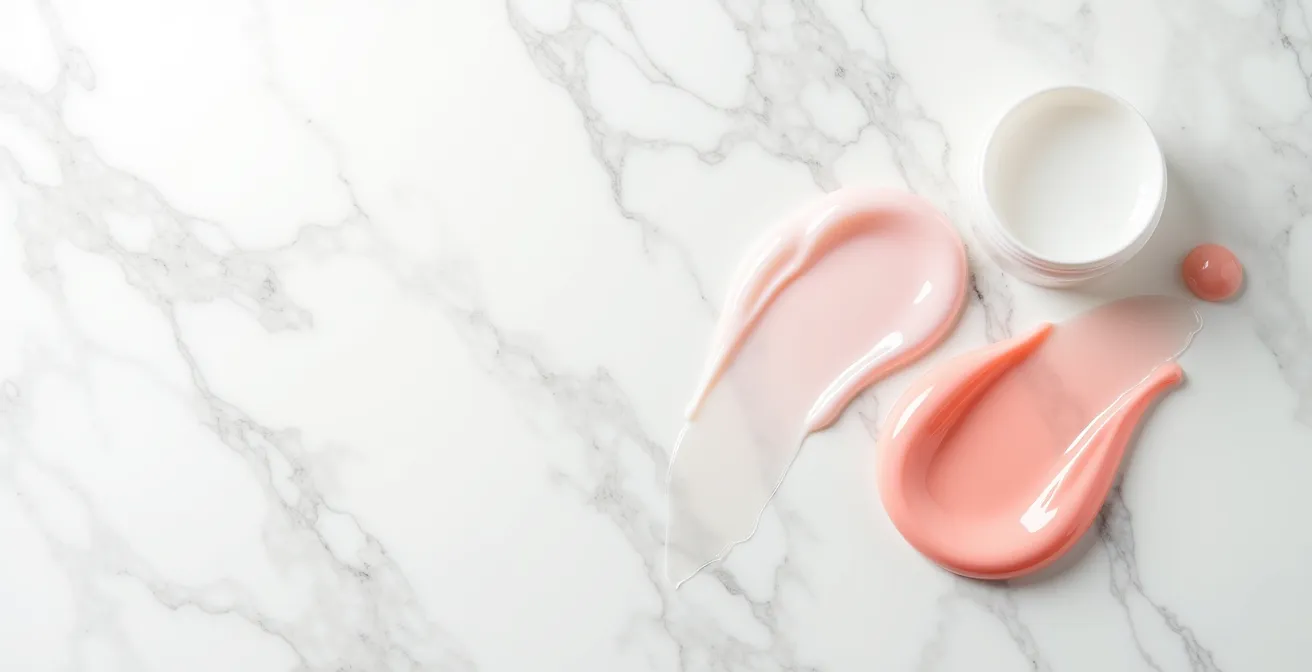
The primary barrier to consistent retinol use is not a lack of efficacy, but the initial irritation, redness, and peeling known as retinization. These side effects often cause users to abandon the ingredient before they can see its transformative benefits. The “Sandwich Method” is an advanced buffering technique designed to mitigate this irritation by protecting the skin’s barrier integrity while still allowing the retinol to perform its function. It involves creating a “sandwich” of moisturizer-retinol-moisturizer.
This method works by creating a permeable barrier of moisture that slows down the penetration rate of the retinol. This slower absorption reduces the initial shock to the skin, minimizing the inflammatory response. It’s particularly effective for those with sensitive skin, dry skin, or anyone new to retinoids. The first layer of moisturizer provides a hydrating cushion, the retinol is then applied, and the final layer of moisturizer seals in the active and provides additional comfort and hydration, counteracting the drying effects of Vitamin A.
While simple in concept, the execution matters for optimal results. It’s not just about slapping on any moisturizer. The type of moisturizer should be tailored to your skin type, and adequate time must be allowed between layers for partial absorption. For those looking to implement this technique, following a structured plan is key to success.
Your Action Plan: Auditing Your Sandwich Method
- Points of contact: Identify your chosen products. Do you have a gentle, non-active moisturizer and a pea-sized amount of retinol ready?
- Collecte: Review your moisturizer’s ingredients. Is it ceramide-rich for dry skin, a lightweight gel for oily skin, or cica-based for sensitized skin? Avoid other actives in your sandwich layers.
- Cohérence: Apply a thin layer of moisturizer to clean, dry skin. Wait 10-15 minutes. Is the skin slightly tacky but not wet? This is the ideal state for the next step.
- Mémorabilité/émotion: Apply the pea-sized amount of retinol. Then, wait another 10 minutes before applying the second moisturizer layer. This waiting period is non-negotiable for effectiveness.
- Plan d’intégration: After 4-5 weeks of using the sandwich method without any irritation, trial applying retinol to bare skin one night per week to assess tolerance for a more direct application.
Tretinoin vs Over-the-Counter Retinol: Is Stronger Always Better?
In the world of retinoids, a common misconception is that stronger is always better. This leads many to seek out prescription-strength tretinoin (retinoic acid) believing it will deliver faster, more dramatic results than its over-the-counter (OTC) cousins like retinol. While tretinoin is indeed more potent, the choice is not about strength alone but about the conversion process, tolerance, and long-term consistency.
The key difference lies in their molecular form. Tretinoin is pure retinoic acid, the exact molecule that binds to receptors in our skin cells to trigger increased cell turnover and collagen synthesis. It’s bio-available and goes to work immediately. OTC retinol, on the other hand, is a precursor. It must undergo a two-step conversion process within the skin: first to retinaldehyde, and then to retinoic acid. This conversion process makes it inherently gentler and slower-acting, but also significantly less irritating.
For many individuals, especially those with sensitive or reactive skin, the intensity of tretinoin can lead to severe irritation, compromising the skin barrier and making consistent use impossible. An effective but abandoned product is useless. OTC retinol, while requiring more patience, can deliver remarkable results over time with much higher tolerability, which is the true key to success with any retinoid. As dermatologist Dr. Mona Gohara explains, the efficacy is still undeniable.
Retinol is converted into retinoic acid in the body and binds to receptors that increase collagen and elastin. While it’s more indirect and less potent than prescription-strength retinoids, it’s still proven to be very effective, although the benefits are more gradual.
– Dr. Mona Gohara, Prevention Magazine Interview
Therefore, the “better” retinoid is the one you can use consistently without sacrificing your skin’s health. For many, a well-formulated OTC retinol is the more strategic long-term choice for achieving sustainable skin renewal.
When to Increase Retinol Frequency: The 3-Month Rule
Once you’ve started retinol and your skin has acclimated without significant irritation, the next question is when and how to increase the frequency of application. Moving too quickly is a common mistake that can trigger a delayed inflammatory response, forcing you back to square one. A methodical approach, often called strategic titration, is essential for building tolerance safely. A conservative “3-Month Rule” provides a reliable framework for this process, prioritizing skin health over speed.
The core principle is to only increase frequency after your skin has demonstrated complete comfort at the current level for at least two full weeks. This means zero signs of irritation: no persistent redness, stinging upon application, or flaky patches. Your first month should be focused on introducing the active slowly, typically applying it only once every three nights. This gives your skin two full days to recover between applications. If your skin remains calm, you can then progress to every other night, and so on. This gradual increase allows your skin’s retinoid receptors to upregulate and adapt without becoming overwhelmed.
This sample titration schedule offers a safe and structured way to advance your retinol usage.
- Month 1: Apply every 3rd night (e.g., Monday, Thursday, Sunday pattern). Focus on establishing a baseline tolerance.
- Month 2: If there has been zero irritation for two consecutive weeks, increase to every other night.
- Month 3: After another two weeks of calm skin, you can progress to a “two nights on, one night off” pattern.
- Month 4 and beyond: Only work toward nightly use after you have successfully maintained the previous frequency without any signs of irritation. The golden rule is patience.
Case Study: Using Bakuchiol as a Strategic Stepping Stone
For those with highly sensitive skin who struggle to even begin a retinol titration calendar, bakuchiol can serve as an excellent preparatory step. A common strategy for previously intolerant users is to start with a bakuchiol serum for 4-6 weeks. This helps to stimulate similar renewal pathways and offers anti-inflammatory benefits, conditioning the skin. Following this period, one can introduce retinol on alternating nights with bakuchiol, creating a form of synergistic cycling that provides consistent stimulation while giving the skin recovery time. This approach has allowed many to successfully incorporate retinol into their routine with minimal discomfort.
Key Takeaways
- Cell turnover slows by up to 50% after age 30, a primary driver of visible aging that requires active intervention.
- Dullness can stem from dead skin buildup or dehydration; proper diagnosis is key before choosing a treatment.
- Retinol purging is a temporary sign of efficacy, while a true breakout is a sign of irritation requiring you to stop the product.
AM or PM: When Is the Best Time to Apply Antioxidants for Protection?
While retinoids are the champions of nighttime repair, a comprehensive skincare strategy must also include daytime protection. This is the domain of antioxidants, molecules that neutralize damaging free radicals generated by UV radiation and pollution. The debate often centers on the best time to apply them, but the scientific consensus is clear: antioxidants are most crucial in the morning to build up a defensive reservoir for the day ahead.
Applying an antioxidant serum in the AM, before sunscreen, creates a shield that works synergistically with your SPF. Sunscreen blocks or reflects UV rays, but some can still get through; antioxidants are the second line of defense, neutralizing the free radicals that are generated. Vitamin C has long been the go-to AM antioxidant, but its inherent instability is a known issue. This is where bakuchiol reveals another of its strategic advantages. Unlike retinol, which is notoriously unstable in sunlight and can cause photosensitivity, bakuchiol is perfectly photostable.
In fact, clinical research shows that bakuchiol demonstrates high antioxidative efficacy and can be safely used during the daytime without causing photosensitization. This makes it an exceptional AM antioxidant, either alongside or as an alternative to Vitamin C, to protect the skin from daily environmental aggressors. A well-rounded routine leverages different molecules at different times of day for a complete “protect and repair” cycle.
This strategic cycling of actives ensures your skin is both protected during the day and repaired at night.
- AM Routine: The focus is on protection. Start with a Vitamin C serum to build your primary antioxidant reservoir. You can follow with bakuchiol, which is safe for daytime use, for added antioxidant and anti-inflammatory benefits. Always finish your morning routine with a broad-spectrum SPF 30 or higher.
- PM Routine: The focus is on repair and renewal. This is the time for your retinoid (retinol). You can layer it with other broader-spectrum antioxidants like Resveratrol or Ferulic Acid. It is generally advised to avoid combining Vitamin C and retinoids in the same PM routine to minimize potential irritation.
Why Is Vitamin C Unstable and How Does It Affect Your Glow?
Vitamin C, particularly in its most potent form, L-Ascorbic Acid, is revered for its ability to brighten skin and boost collagen. However, its Achilles’ heel is its extreme instability. When exposed to light, air, and heat, L-Ascorbic Acid rapidly oxidizes. This degradation process not only renders the molecule ineffective but can also generate pro-oxidant species, potentially causing more harm than good. This is why you’ll often see Vitamin C serums turn yellow or brown—a clear sign of oxidation and lost efficacy. This instability directly impacts the “glow” you’re trying to achieve; an oxidized serum simply cannot deliver the promised antioxidant protection or brightening effects.
This fragility has led to an ongoing formulation challenge in the cosmetic industry, with brands exploring more stable (but often less potent) Vitamin C derivatives, airless pumps, and opaque packaging. This is another area where bakuchiol presents a compelling mechanistic advantage. It offers powerful antioxidant benefits without the inherent instability of L-Ascorbic Acid. Its molecular structure is robust and does not degrade with exposure to light or air.
Case Study: Bakuchiol’s Stability and Synergistic Advantage
Unlike L-Ascorbic Acid, which requires careful handling and has a notoriously short shelf life once opened, bakuchiol remains stable in typical product packaging and maintains its efficacy throughout its use. This stability means consumers receive the full benefit of the ingredient from the first drop to the last. Furthermore, bakuchiol’s ability to work synergistically with Vitamin C makes it an ideal companion. Using a stable bakuchiol serum in the morning can bolster the skin’s antioxidant defenses without the worry of degradation, and it can even help stabilize other less robust ingredients in a formula. Its anti-inflammatory properties also help to calm any potential irritation from more acidic actives, making it a valuable team player in a comprehensive routine.
Bakuchiol’s benefits extend beyond just mimicking retinol; its antioxidant profile is broad and uniquely suited for sensitive or acne-prone skin. It addresses multiple pathways of skin health, from free-radical damage to inflammation, making it a versatile and reliable active.
Armed with this molecular understanding of how retinol and bakuchiol work, you can now move beyond the hype. Instead of viewing them as rivals, you can build a truly effective, personalized strategy that leverages the strengths of each molecule to achieve resilient, renewed, and radiant skin.