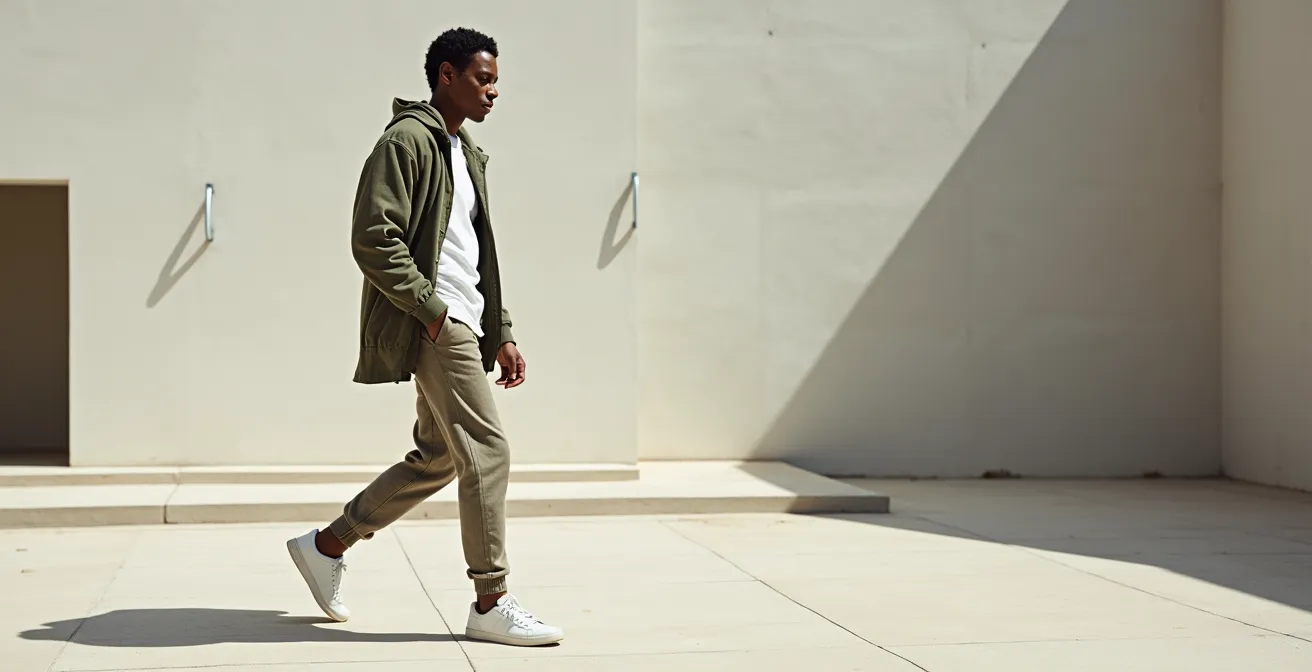
The secret to elevated joggers isn’t a specific shoe or jacket; it’s mastering “Intentional Friction” by pairing them with pieces they seemingly shouldn’t go with.
- Focus on materials with “visual weight,” like heavy cotton, to provide structure.
- Create contrast by mixing casual joggers with formal elements like loafers or a structured coat.
- Use the “Rule of Three”—combining your joggers (1) with a quality top (2) and a third piece for texture or layering (3)—to build a complete outfit.
Recommendation: Stop trying to make your joggers look “nicer.” Instead, use them as a comfortable base to intentionally create a high-low look that is polished and deliberate.
Let’s be honest. We all live in joggers now. They’re the uniform for remote workers, the go-to for busy parents, and the universal symbol of comfort. But there’s a fine line between “effortlessly cool” and “I haven’t left the house in three days.” The common advice—pair them with a clean t-shirt and fresh sneakers—is a platitude that barely scratches the surface. It’s the reason so many jogger outfits end up looking uninspired, like a compromise rather than a choice. We see celebrities pulling them off with blazers and heels, yet when we try, something feels off.
The problem is we’re thinking about it all wrong. We’re trying to dress the joggers *up*, when the real secret is to use them as a foundation for something more interesting. The key isn’t about finding the “right” items to match; it’s about creating what I call Intentional Friction. It’s the art of deliberately mixing high-end textures, structured silhouettes, and polished accessories with the inherent casualness of joggers. This creates a look that is thoughtfully composed, not accidentally thrown together. It signals that you chose to wear joggers on purpose, as a style move.
This guide will break down the principles behind that mindset. We’ll move beyond the basics and explore why certain fabrics feel more luxurious, how the right shoe can change everything, and how to use styling rules from high fashion to elevate your most comfortable pants. Forget the old rules; it’s time to make comfort look deliberate and chic.
To guide you through this style transformation, we’ve structured this article to cover every crucial element, from the fabric of your joggers to the final accessory that pulls it all together. Here’s a look at what we’ll cover.
Summary: How to Master Relaxed Sophistication with Joggers
- Why Does Heavy Cotton Look More Expensive Than Thin Jersey?
- Sneakers or Loafers: Which Shoe Instantly Upgrades a Casual Outfit?
- The Oversized Mistake: When Does “Relaxed” Become “Ill-Fitting”?
- Gym Wear vs Street Wear: Where Is the Line for Public Outings?
- How to Transition a Casual Day Look to a Dinner Outfit in 5 Minutes?
- Why Does Working Alone Decrease Creativity for Extroverts?
- How to Transform Office Wear into Evening Wear Using Only Accessories?
- How to Use the “Rule of Three” to Elevate a Basic Outfit?
Why Does Heavy Cotton Look More Expensive Than Thin Jersey?
It all starts with the fabric. The difference between looking chic and looking sloppy in joggers often comes down to what I call visual weight. A thin, flimsy jersey fabric clings, bunches, and loses its shape, screaming “pajamas.” A heavier material, like a quality French Terry or a dense cotton knit, has structure. It hangs off the body, creating cleaner lines and a more substantial silhouette. This inherent structure is what our eyes perceive as more premium and intentional. It’s no surprise that a recent report shows cotton accounts for over 41.60% of the apparel market’s fabric choices; its versatility and ability to hold a shape are unmatched.
Think about the difference between a cheap t-shirt and a luxury one. The luxury version is almost always made of a heavier, more structured cotton. The same principle applies to joggers. Fabrics like French Terry, with its soft, looped interior, provide not only comfort but also a density that prevents the material from looking thin or cheap. This is the foundation of an elevated look. Before you even think about shoes or a jacket, the fabric of your joggers has already decided whether your outfit has the potential to look expensive or not.
So, the first rule of elevated joggers is to prioritize fabric quality. Look for joggers that feel substantial in your hand. They should have a weight to them that allows them to drape cleanly rather than cling. This single choice is the most important investment you can make in building a sophisticated, comfortable wardrobe.
Sneakers or Loafers: Which Shoe Instantly Upgrades a Casual Outfit?
If fabric is the foundation, footwear is the headline. Your choice of shoe single-handedly defines the intention of your outfit. While it’s no shock that with athletic footwear holding 28.9% of the revenue share, sneakers are the default choice for joggers, not all sneakers are created equal. The mistake I see constantly is pairing tailored joggers with bulky, technical running shoes. That creates a confusing message: are you heading to the gym or to lunch? The key is to create that Intentional Friction we talked about.
This is where the high-low mix comes into play. To instantly upgrade joggers, you have two powerful options: the elevated sneaker or the unexpected formal shoe.
The Elevated Sneaker: Forget your gym shoes. We’re talking about minimalist dress sneakers made from premium materials like clean white leather or rich suede. These aren’t for performance; they’re for style. Their clean lines and high-quality finish create a bridge between the casualness of the joggers and a more polished aesthetic. They say “comfort, but make it fashion.”
The Unexpected Formal Shoe: This is where the magic really happens. Pairing your joggers with a pair of leather loafers, a chic ballet flat, or even a pointed heel is the ultimate power move. It’s a deliberate contradiction that immediately signals confidence and style savvy. The formality of the shoe clashes beautifully with the casualness of the pants, creating a look that is dynamic, surprising, and undeniably chic. It’s the definition of “Intentional Friction.”
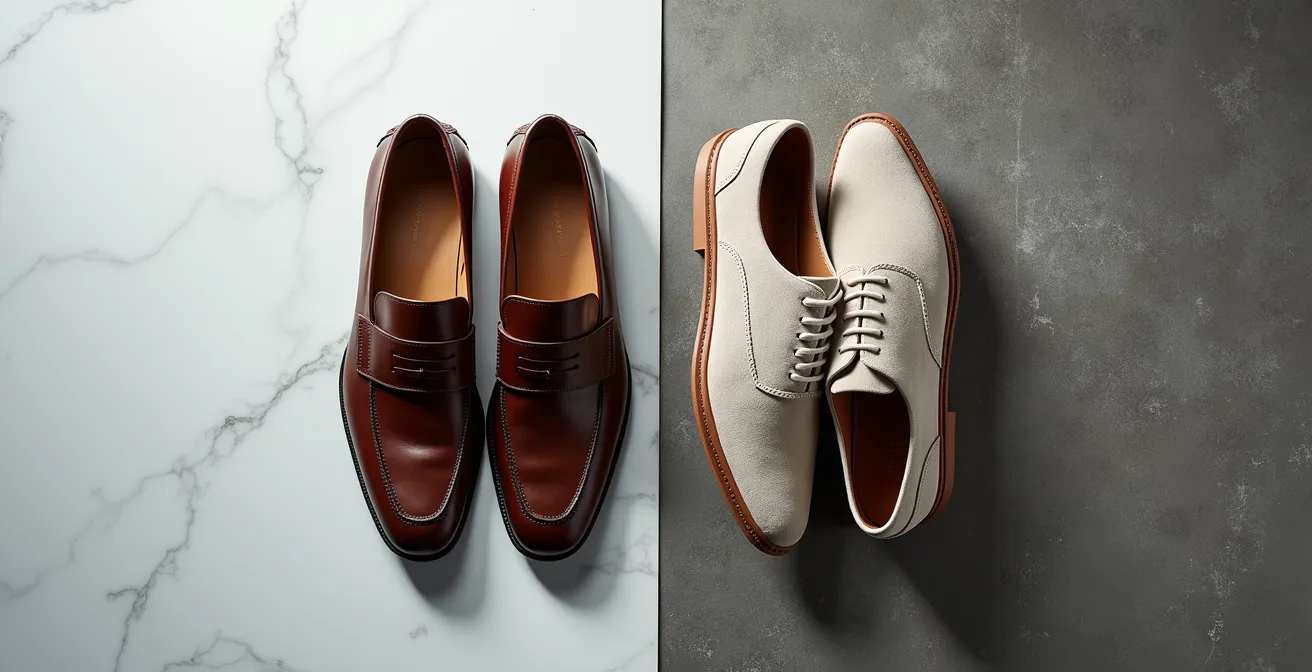
As you can see, the choice is less about the category of shoe (sneaker vs. loafer) and more about the message it sends. A dress sneaker keeps the look sleek and modern, while a loafer injects a dose of classic elegance. Both work because they are intentional choices that elevate the entire outfit beyond the realm of loungewear.
The Oversized Mistake: When Does “Relaxed” Become “Ill-Fitting”?
We’ve covered fabric and footwear, but it all falls apart without the right fit. The goal with joggers is a “relaxed” silhouette, but many people misinterpret this as “baggy.” There is a world of difference. A truly relaxed fit is about an intentional shape, not a lack of one. When joggers are too baggy, they pool around the ankles and create a sloppy, formless look. Too tight, and they look like leggings, defeating the purpose of relaxed comfort.
The sweet spot is a tapered fit. The joggers should have room in the thigh and then gently narrow down to a clean cuff that sits just above the ankle. This is non-negotiable. The cuff breaking on top of your shoe, like a traditional pant, is a dead giveaway of an ill-fitting pair. The modern silhouette demands a slight crop to show off your footwear and create a clean, sharp line. This is why ankle-length and mid-calf joggers are so popular for versatile styling.
To ensure you’re getting the fit right, you need to conduct a quick audit before you commit. It’s about checking a few key points that define the perfect silhouette architecture.
Your 5-Point Fit Audit for Flawless Joggers
- Waist Check: Does the elastic waistband sit flat and securely without excessive bunching or needing to be pulled tight? A good fit here prevents a “paper bag” effect at your midsection.
- Thigh & Seat Scan: The fit should be skimming, not tight. You should have ease of movement without the fabric pulling or looking strained. This is the “relaxed” part of the equation.
- Taper Test: From the knee down, does the leg line narrow cleanly? This tapering is crucial to avoid a baggy, shapeless look and create a modern silhouette.
- Ankle Break Point: The cuff must end above the ankle bone. It should never touch the top of your shoe. This showcases your footwear and keeps the look crisp.
- The Shoe Synergy: Put on the shoes you plan to wear. Does the length of the jogger work with the shoe? A clean break above a loafer or a minimalist sneaker is the goal.
Understanding the nuances of jogger lengths and their benefits can also help you choose the right pair for your needs, as shown in a recent comparative analysis of market trends.
| Length Style | Market Value 2024 | Key Benefit |
|---|---|---|
| Ankle-length | $2.8 billion | Versatility and comfort |
| Mid-calf | $3.2 billion | Sporty and casual appeal |
| Full-length | $3.8 billion | Warmth and coverage |
Gym Wear vs Street Wear: Where Is the Line for Public Outings?
The explosion of athleisure has blurred the lines between the gym and the street. With sportswear being the fastest-growing apparel segment, with a 4.71% CAGR, it’s clear we love to be comfortable. But this is also where the biggest style mistakes happen. Just because you *can* wear your gym clothes all day doesn’t mean you *should*. The line between gym wear and street wear is drawn with two things: fabric technology and styling intention.
Gym-specific joggers are typically made of shiny, synthetic materials with mesh panels, prominent logos, and performance-oriented details. These materials are designed to wick sweat, not to look chic at brunch. Street-ready joggers, on the other hand, often use innovative fabrics that blend the comfort of athletic wear with the look of a more traditional pant. They might be cotton, polyester blends, or technical fabrics, but they are chosen for their drape, texture, and finish, not their sweat-wicking properties. These technological advancements in fabric are what enable joggers to transition from performance gear to a fashion staple.

Ultimately, the difference comes down to purpose. A street-wear jogger outfit is composed with the same thought as any other outfit. It involves deliberate choices: a structured jacket, a quality knit, leather accessories, and polished footwear. It’s a look built *around* the joggers. A gym outfit, by contrast, is purely functional. If your joggers are shiny, have reflective strips, or look like they belong on a treadmill, they should probably stay there. The goal for public outings is to look purposeful, not like you just finished a workout.
How to Transition a Casual Day Look to a Dinner Outfit in 5 Minutes?
You want to look like you chose to put on joggers on purpose, not because your laundry pile won.
– Joseph Cheatham, Men’s Health Style Editor
This quote perfectly captures the essence of elevated jogger styling, and it’s never more important than when you need to transition from day to night. The ability to take a casual daytime look and make it dinner-appropriate in minutes is a modern-day superpower. With joggers, it’s surprisingly easy if you focus on three key swaps: the top layer, the accessories, and the shoes (which we’ve already covered).
The fastest way to transform your look is by adding a piece of structured outerwear. During the day, you might be wearing your joggers with a simple t-shirt or hoodie. To elevate it for the evening, throw on a tailored blazer, a sharp leather jacket, or a classic trench coat. This single act adds structure and sophistication, instantly counteracting the casualness of the joggers. A wool overshirt or a quality crewneck sweater under a jacket also adds a layer of texture and polish.
Next, think about your accessories. Swap your daytime tote or backpack for a structured leather bag or a sleek clutch. This small change signals a shift in intention from casual errands to a more formal occasion. Finally, consider adding a piece of jewelry. A classic watch, a simple chain necklace, or a pair of elegant earrings can add a touch of sparkle and refinement that completes the evening transformation. These small, deliberate additions are what make the outfit feel complete and purposeful.
Why Does Working Alone Decrease Creativity for Extroverts?
This might seem like a strange question in an article about fashion, but there’s a powerful metaphor here for personal style. Think of “working alone” as dressing in a style vacuum—repeating the same safe outfits over and over. “Creativity” is your ability to put together new, interesting looks. For some people, just like extroverts who need external energy to thrive, style creativity can stagnate without outside input. You fall into a “style uniform” of joggers and a hoodie because it’s easy and you’re not seeing anything else to inspire you.
Breaking out of a style rut requires actively seeking external stimuli. You can’t expect to feel inspired if your only reference point is your own closet. Just as an extrovert might brainstorm with a team, you need to “collaborate” with the world of fashion. This means intentionally exposing yourself to new ideas. Spend an hour scrolling through street style photos from fashion week, flip through a high-fashion magazine, or even just people-watch in a stylish part of town. Pay attention to how others are combining colors, textures, and silhouettes.
The goal isn’t to copy these looks directly, but to absorb the creative energy. You might see someone wearing a color combination you’d never considered or layering pieces in an unexpected way. This external input fuels your own creativity, giving you the confidence to try something new, like pairing those loafers with your joggers or throwing that blazer on top. Getting dressed should be a creative act, not a chore. But creativity, for many of us, isn’t a solitary pursuit. It needs fuel.
How to Transform Office Wear into Evening Wear Using Only Accessories?
The principle of transformation we discussed earlier isn’t limited to just one type of outfit. The logic of using accessories to pivot from one context to another is a universal styling rule, and it’s one that applies perfectly to joggers. Just as you might swap your work tote for a clutch to go from the office to dinner, you can use the same accessory-driven strategy to elevate your comfortable base.
The core idea is to add elements that are unapologetically evening-appropriate. One of the most effective ways to do this is with footwear. Swapping your daytime sneakers for a pair of strappy heels or polished boots instantly changes the posture and attitude of the entire look. Celebrities often lean toward high, pointed-toe heels with their joggers, creating a dramatic and glamorous silhouette.
Beyond shoes, consider your top. A simple t-shirt can be instantly elevated by layering a tailored blazer over it. If the blazer is paired with a sleek bodysuit, it creates an even more polished and put-together feel. The bodysuit can offer a pop of color, or you can maintain a neutral palette for a sophisticated, monochrome look. Finally, don’t underestimate the power of jewelry. Adding a statement necklace, bold earrings, or a stack of metallic bracelets can introduce a touch of sparkle and formality, signaling that you are dressed for the evening.
Key Takeaways
- The secret to great jogger style is “Intentional Friction”: mixing casual with formal elements.
- Fabric matters most. Choose heavier cottons with “visual weight” for a more expensive look.
- Your outfit’s intention is set by your shoes. A dress sneaker or loafer instantly elevates the look.
How to Use the “Rule of Three” to Elevate a Basic Outfit?
If there is one master rule to take away that will elevate not just your joggers, but your entire wardrobe, it’s the Rule of Three. It’s a simple concept that stylists use to ensure an outfit looks complete and intentional, rather than like you just threw on some clothes. A basic outfit consists of two pieces: a top and a bottom. The Rule of Three involves adding a third element to create interest, depth, and personality.
This third piece can be a few different things:
- A Layering Piece: This is the most common application. Adding a jacket, a cardigan, a blazer, or an open button-down shirt over your top and joggers instantly adds dimension.
- A Statement Accessory: A significant accessory like a bold scarf, a hat, or a statement bag can act as your third piece, drawing the eye and adding a point of focus.
- A Pop of Texture or Pattern: The third element can be about contrast. If your joggers and top are solid and simple, a patterned shirt or a chunky, textured sweater can provide the necessary visual interest to complete the look.
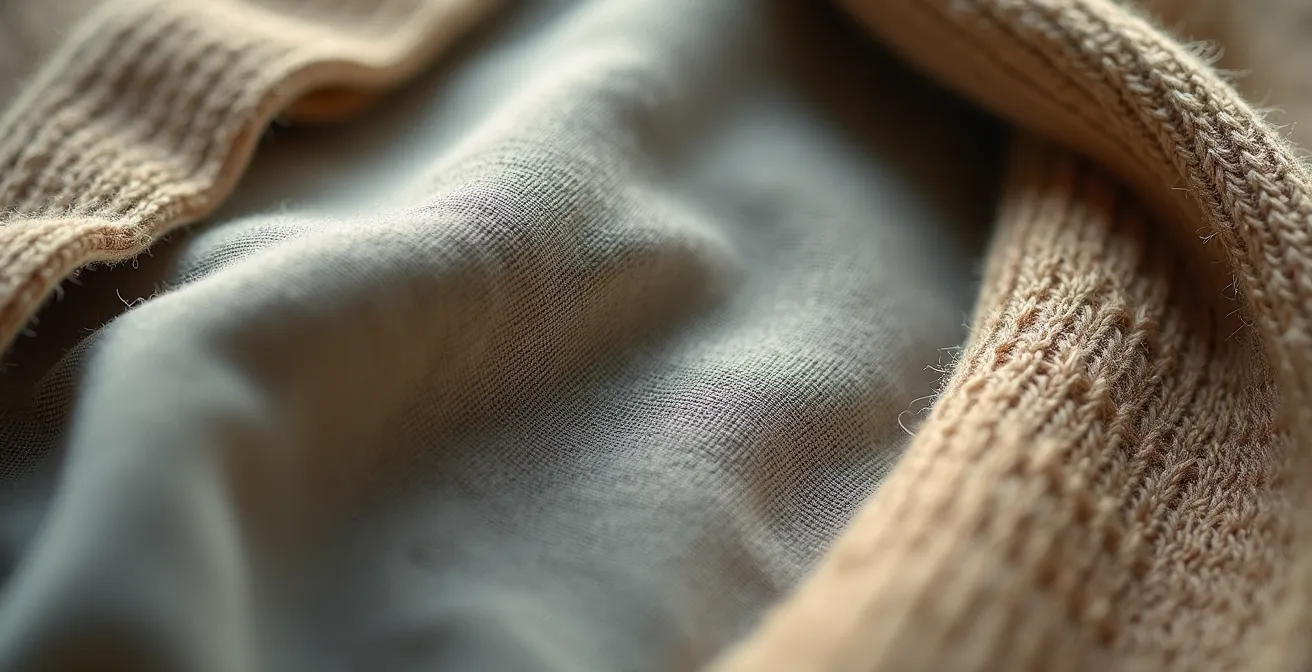
The beauty of joggers is that they provide a neutral, comfortable base, giving you plenty of room to play with that third element. Since the pants are so unassuming, you have the freedom to experiment with bold textures and patterns on your upper half without the outfit feeling too busy. A simple white tee and joggers (two pieces) is just loungewear. But add a denim jacket (the third piece), and suddenly it’s a real outfit. This simple rule is the bridge between looking dressed and looking styled.
By embracing these principles—prioritizing fabric, creating intentional friction, and applying the Rule of Three—you can transform your joggers from a symbol of surrender to a cornerstone of a sophisticated, modern wardrobe. Now, the next step is to start building these looks with confidence.