
Ordering takeout 3 times a week isn’t a small splurge; it’s a major financial leak that costs thousands per year and sacrifices direct control over your health.
- Restaurant meals are engineered for craving, not well-being, using high levels of sodium, sugar, and unhealthy fats that are invisibly priced in.
- Strategic home cooking, using professional techniques, is not only dramatically cheaper but can be faster and far more nutritious once you master the system.
Recommendation: Stop comparing meals dollar-for-dollar and start analyzing the total cost to your wallet, your time, and your body. This guide shows you how to run the numbers like a domestic economist.
It’s a familiar feeling. It’s the end of a long day, you’re tired, and the thought of chopping vegetables feels monumental. In a few taps, a hot meal from your favorite restaurant is on its way. This convenience feels like a small, well-deserved luxury. We often justify it by thinking the cost isn’t *that* much more than cooking, especially when you factor in the time and effort. This is the common narrative, the surface-level calculation that keeps food delivery apps in business.
But this comparison is fundamentally flawed. We’re not just paying a few extra dollars for a meal; we’re buying into an inflated food economy designed for profit, not for our financial or physical well-being. The real cost of takeout is hidden in bloated prices, cheap ingredients, and portions engineered to be addictive. The question isn’t just “Is cooking at home cheaper?”—we know the answer is yes. The real, empowering question is, “How can I adopt the systems of a professional kitchen to make home cooking so efficient, delicious, and financially rewarding that takeout becomes an obviously poor investment?”
This guide moves beyond the basics. We will break down the true financial numbers, demystify why restaurant food is so addictive, and give you a clear roadmap to reclaim your food budget. By mastering a few key principles of flavor architecture, meal prep, and kitchen ergonomics, you can turn your kitchen into a powerful engine for building wealth and health, one meal at a time.
To give you a clear and actionable path, this article is structured to tackle the most common hurdles and questions. We will explore the science behind restaurant flavors, provide time-saving prep strategies, and reveal the simple mistakes that are costing you money.
Summary: Your Financial Guide to Cooking at Home vs. Takeout
- Why Does Restaurant Food Taste Better But Make You Feel Bloated?
- How to Prep 5 Lunches in Under 90 Minutes on a Sunday?
- Fresh vs Frozen Vegetables: Which Is More Nutritious in Winter?
- The Storage Mistake That Makes Your Produce Rot in 3 Days
- How to Organize Your “Work Triangle” to Cook Faster?
- Why Does staying at All-Inclusive Resorts Benefit Foreign Corporations?
- The Hormonal Error of Cutting Fat Too Low in Your Diet
- Why Is “Eating the Rainbow” More Than Just a Cliché for Your Immune System?
Why Does Restaurant Food Taste Better But Make You Feel Bloated?
The magnetic pull of restaurant food is no accident; it’s a carefully engineered science. Chefs are masters of creating hyper-palatable dishes by leaning on a trinity of ingredients your brain is hardwired to crave: fat, salt, and sugar. These elements create intense flavor and a satisfying mouthfeel, but they’re often used in quantities that would be shocking if you saw them measured out. That feeling of sluggishness or bloating after a big takeout meal is your body reacting to an overload of sodium, inflammatory oils, and refined carbohydrates. It’s a short-term pleasure with a noticeable physical cost.
Beyond the health impact, there’s a staggering financial one. You are paying a massive premium for this convenience. The numbers are clear: the average meal at an inexpensive restaurant costs nearly 285% more than a comparable meal cooked at home. That’s not a small markup; it’s a fundamental difference in the food economy you’re participating in. Fortunately, you can replicate that “restaurant-quality” taste without the financial or physical hangover by mastering a few professional techniques. It’s not about adding more salt; it’s about building flavor architecture.
- Use high-heat searing: The browning on meat and vegetables isn’t just color; it’s the Maillard reaction, which creates hundreds of new flavor compounds. Heat your pan until a drop of water evaporates instantly before adding your oil and protein. This one step creates a depth of flavor that steaming or low-heat cooking can never achieve.
- Layer umami-rich ‘base ingredients’: Umami is the fifth taste, responsible for a savory, “meaty” flavor. Professional kitchens build it into dishes from the start. A teaspoon of tomato paste, a pinch of mushroom powder, or even a small amount of anchovy paste can create incredible depth in sauces and stews without adding excess salt.
- Deglaze your pan: After searing meat, don’t wash away the browned bits (fond) stuck to the bottom of the pan. Splash in a bit of wine, broth, or even water and scrape them up with a wooden spoon. This creates an instant, flavor-packed sauce that captures all the deliciousness you just created.
By implementing these simple chef secrets, you shift from merely cooking ingredients to strategically building flavor. Your home-cooked meals will start to rival their restaurant counterparts, making the decision to cook at home an easy one for both your palate and your wallet.
How to Prep 5 Lunches in Under 90 Minutes on a Sunday?
One of the biggest arguments for takeout is “I don’t have time to cook every day.” This is a valid concern in a busy life. The solution, however, isn’t daily cooking—it’s a system. Meal prepping is the strategic answer, but many people are put off by the idea of eating the same identical meal for five days straight. The professional approach isn’t to create five finished, identical meals, but to prep components that can be assembled in different ways throughout the week.
This “component prep” method offers variety and takes less than 90 minutes. Instead of five containers of chicken, broccoli, and rice, you spend your time creating a “palette” of ingredients. On Sunday, focus on these four categories:
- Cook a grain: Make a large batch of quinoa, brown rice, or farro.
- Roast vegetables: Toss a big sheet pan of chopped sweet potatoes, broccoli, and bell peppers with olive oil and salt, and roast until golden.
- Prepare a protein: Grill or bake a pack of chicken breasts, or cook a large batch of lentils or chickpeas.
- Make a sauce: Whisk together a versatile vinaigrette or a tahini-based dressing.
A time-saving strategy for protein is to cook it in bulk and freeze it in portions. For example, you can cook several pounds of ground beef with onions and garlic, drain the fat, and separate the cooked meat into freezer bags. This can then be used instantly for tacos, pasta sauce, or a grain bowl, dramatically cutting down on weekday cooking time.
With these components ready in your fridge, a weekday lunch is a two-minute assembly job: a scoop of grain, a handful of veggies, your protein of choice, and a drizzle of sauce. One day it’s a grain bowl, the next it’s a salad, and the day after you can stuff a pita. It’s the same set of ingredients, but it feels like a different meal every time.
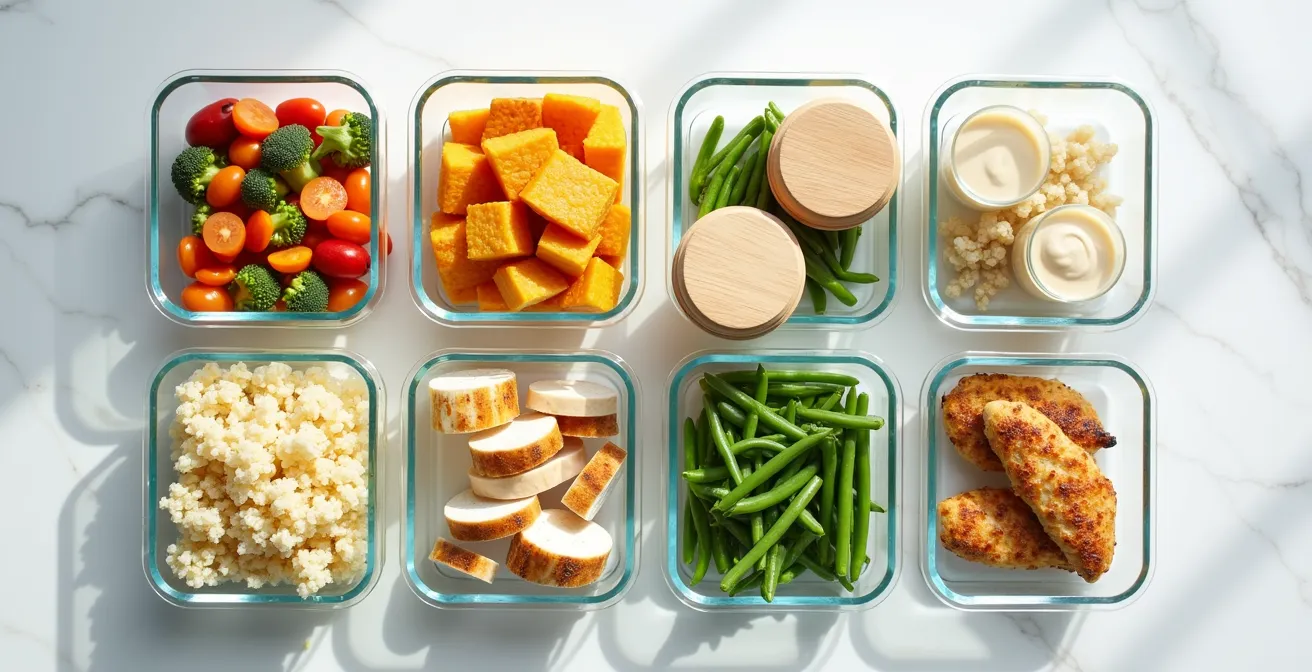
This visual approach, with containers of vibrant and ready-to-go ingredients, transforms cooking from a daily chore into a quick, creative assembly process. You get the speed of takeout with the cost and health benefits of a home-cooked meal.
This is not just about saving time; it’s about redesigning your week to make the healthy, cost-effective choice the easiest choice. It’s a small investment of time on one day for a huge return on investment for the next five.
Fresh vs Frozen Vegetables: Which Is More Nutritious in Winter?
A common belief is that “fresh is always best,” leading many to either buy expensive, out-of-season produce in winter or skip vegetables altogether. This is a costly mistake, both financially and nutritionally. The truth is, when it comes to produce, “frozen” is often the superior choice, especially in winter. The concept to understand here is nutrient integrity. A “fresh” tomato that has traveled for two weeks from another hemisphere has lost a significant portion of its vitamins due to time, light, and heat exposure.
In contrast, vegetables destined for the freezer are typically picked at their peak ripeness and “flash-frozen” within hours. This process locks in vitamins and minerals, preserving their nutrient integrity far more effectively than a long supply chain. For a student or couple on a tight budget, a bag of frozen peas, broccoli, or spinach is a nutritional and financial powerhouse. It eliminates waste (you only use what you need) and provides peak-season nutrition at a consistent, off-season price.
Of course, texture is a key difference. Frozen vegetables are not ideal for raw preparations like salads, but they are perfect for cooked dishes where texture is less critical. This table, based on insights from food experts, breaks down the best use for each.
| Use Case | Fresh Vegetables | Frozen Vegetables |
|---|---|---|
| Salads & Raw Preparations | Best choice – crisp texture essential | Not recommended |
| Soups & Stews | Good option | Excellent – texture changes don’t matter |
| Quick Sautés | Preferred for texture | Works well after thawing |
| Smoothies | Good when available | Ideal – already cold, no ice needed |
| Cost in Winter | More expensive out of season | Consistent pricing year-round |
As this comparative analysis highlights, choosing frozen is a strategic decision. It’s about getting the maximum nutritional return on your investment, especially when fresh, local options are scarce and expensive.
Embracing the freezer aisle isn’t a compromise; it’s a smart economic and health strategy. It ensures you have access to nutrient-dense, affordable vegetables year-round, freeing up your budget for other quality ingredients.
The Storage Mistake That Makes Your Produce Rot in 3 Days
You did everything right. You bought fresh, beautiful produce, feeling proud of your healthy choices. But just a few days later, you open the fridge to find slimy spinach and spotted bananas. This is not just frustrating; it’s a direct financial loss. This rapid spoilage is a massive hidden cost in the home cooking equation, and it’s a problem of national scale. In fact, it’s estimated that 30-40% of the United States food supply goes to waste, and a significant portion of that happens in our own homes.
The primary culprit behind this rapid decay is an invisible gas: ethylene. Some fruits and vegetables, like apples, bananas, and tomatoes, are high “ethylene producers.” They release this gas as they ripen. Other produce, such as leafy greens, broccoli, and carrots, are highly “ethylene sensitive.” When stored together, the gas from the producers acts like a fast-forward button, causing the sensitive items to rot prematurely. Tossing your apple and your bag of spinach into the same crisper drawer is a recipe for waste.
The solution is strategic separation. Think of your two crisper drawers as different climate zones. One is for the “gassers,” and the other is for the “sensitives.” This simple act of organization can double the life of your produce, effectively cutting your grocery bill and ensuring the food you buy actually gets eaten.
Action Plan: Audit Your Food Storage Habits
- Identify points of contact: List all areas where you store produce (crisper drawers, countertop bowls, pantry).
- Collect and inventory: Take everything out. Group your current produce into ethylene producers (apples, bananas, avocados, tomatoes) and ethylene sensitives (leafy greens, carrots, broccoli, herbs).
- Check for coherence: Are producers and sensitives currently co-mingling? The goal is total separation. Designate one crisper drawer for each category.
- Assess and separate: Implement a new system. Keep high-ethylene producers like apples bagged and in their own drawer. Store sensitive items like lettuce and carrots in paper bags in the other drawer to protect them.
- Create an integration plan: For countertop items, keep bananas separate from other fruits. This simple audit will immediately reduce waste and save money.
e
By understanding this simple science, you transform your refrigerator from a “produce graveyard” into a tool for preserving the money and nutrients you worked hard to bring home. This is a fundamental skill for any domestic economist.
How to Organize Your “Work Triangle” to Cook Faster?
Even with the best ingredients, a disorganized kitchen can make cooking feel like a chaotic battle. The feeling of constantly walking back and forth, searching for a utensil, or not having enough counter space is a major deterrent. This is where the concept of kitchen ergonomics comes in. The “work triangle” is a classic design principle that connects the three main work areas: the sink, the refrigerator, and the stove. The idea is to keep these points close to each other to minimize wasted steps. However, you can supercharge this concept by thinking in terms of “work zones” instead of just a triangle.
An efficient kitchen is organized by task, not by item type. This means creating dedicated zones for your most common activities:
- The Prep Zone: This is your primary counter space, ideally located between the sink and the stove. It should contain your cutting boards, knives, mixing bowls, and a small bin for compost scraps. Everything you need to chop and prepare ingredients is within arm’s reach.
- The Cooking Zone: This is the area around your stove. It’s where you should keep your most-used pots and pans, cooking oils, spices, and utensils like spatulas and tongs. You shouldn’t have to walk across the kitchen to grab the salt while something is sizzling on the pan.
- The Storage Zone: This includes your fridge and pantry. Organize them so that like items are grouped together (e.g., all grains on one shelf, all canned goods on another) to make finding things instantaneous.
This zonal organization is amplified by modern kitchen technology. Tools like an Air Fryer, Instant Pot, or Crock Pot can act as self-contained cooking stations, freeing up your stove and oven and dramatically speeding up the cooking process. Placing these tools in their own dedicated spot further enhances the efficiency of your kitchen workflow.
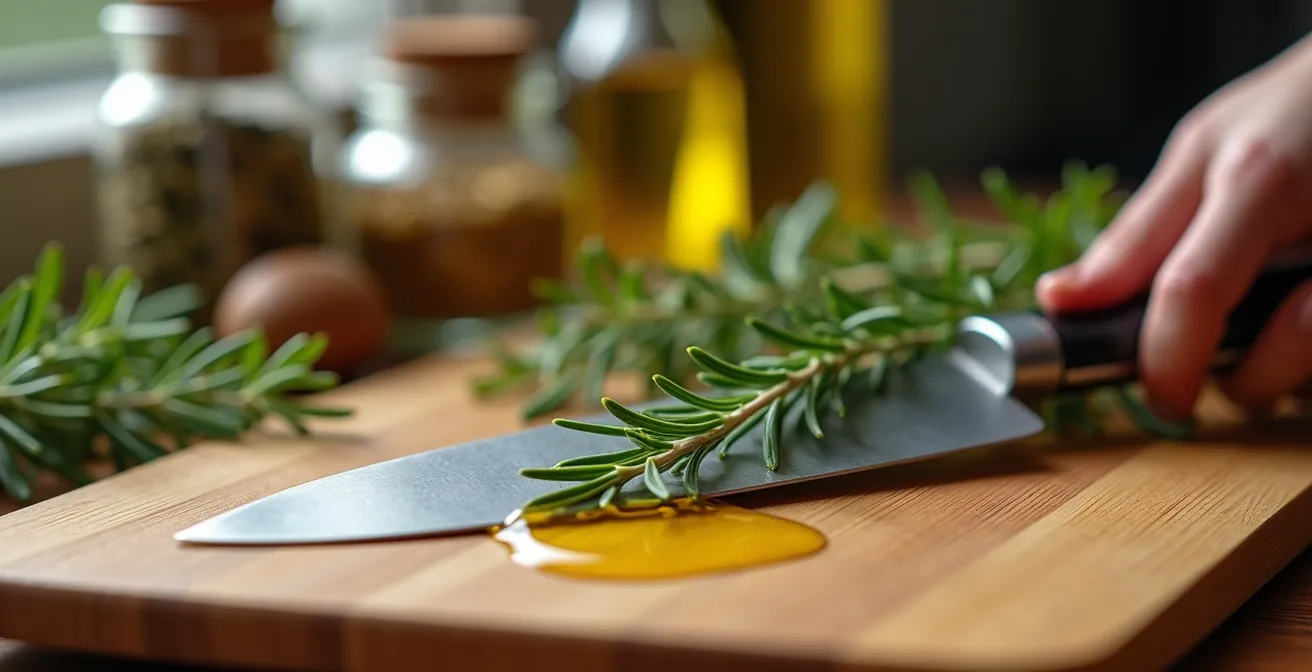
The goal of good kitchen ergonomics is to achieve a state of “flow,” where your movements are fluid and intuitive. By organizing your space logically, you drastically reduce the friction and mental energy required to cook, making the entire process faster and more enjoyable.
When your environment is set up for success, the act of cooking becomes less of a chore and more of a smooth, satisfying process. This is a one-time investment in organization for a daily dividend of time and sanity.
Why Does staying at All-Inclusive Resorts Benefit Foreign Corporations?
The seductive ease of an all-inclusive resort, where every meal and drink is handled for you, has a direct parallel in our daily food choices: the takeout order. On the surface, both seem like a great deal—a fixed price for ultimate convenience. However, in both scenarios, the economic reality is more complex. At many resorts, the majority of the money you spend flows out of the local community and back to foreign corporations, a phenomenon known as “economic leakage.” The convenience you pay for doesn’t support a diverse local ecosystem; it strengthens a monolithic, external entity.
The same principle applies to the takeout economy. When you order from a major chain or through a large delivery app, you are often participating in a similar system. A significant portion of your money goes to corporate overhead, marketing, and shareholder profits, not just the food itself. You are paying a premium for a curated, convenient experience, and that premium is often extracted at the expense of ingredient quality or fair wages. This creates an illusion of value, where the true cost is obscured by the ease of the transaction.
Breaking this illusion requires a shift in mindset, from being a passive consumer to an active domestic economist. As accredited financial counselor Severine Bryan advises, the first step is to actively compare the costs and see the numbers for yourself:
Cutting back on fast food requires discipline and strategic intent. The first thing I usually have clients do is compare the costs of similar meals. For example, what is the cost of a meal you cook at home, and how much does it cost when you eat out?
– Severine Bryan, U.S. News – accredited financial counselor
This simple act of calculation pulls back the curtain. When you realize you can make a delicious, high-quality pasta dish at home for $3 per serving, the $18 version from a delivery app suddenly looks very different. It’s no longer just a meal; it’s a financial decision with a clear return on investment.
Just like choosing to eat at a local family-owned restaurant on vacation, choosing to cook at home is an act of redirecting your financial resources. You are investing in your own “local economy”—your health, your skills, and your bank account.
The Hormonal Error of Cutting Fat Too Low in Your Diet
In the quest for “healthy eating,” one of the most common and damaging myths is the fear of dietary fat. For decades, “low-fat” was marketed as the gold standard for health and weight loss. This has led many home cooks to skimp on oils, choose the leanest possible cuts of meat, and avoid foods like nuts and avocados. This isn’t just making your food less flavorful; it’s a serious error in hormonal intelligence. Dietary fats are not the enemy; they are essential building blocks for critical bodily functions, most notably the production of hormones.
Hormones like testosterone and estrogen, which regulate everything from energy levels and mood to metabolism and muscle growth, are synthesized from cholesterol and fat. When you cut your fat intake too drastically, you are depriving your body of the raw materials it needs to maintain a healthy endocrine system. This can lead to fatigue, mood swings, and a stalled metabolism—the very things people are often trying to fix with their diet.
e
Ironically, restaurants understand the power of fat very well, but they use it for flavor and profit, not your health. They often rely on cheap, highly processed, and inflammatory fats to make dishes taste rich and satisfying. This is especially true for high-ticket items. For example, when it comes to extravagant meals like steak, there’s typically an extreme premium, sometimes up to a 300% markup. You could buy three or four of the same quality ribeye steaks from a grocery store for the price of one at a steakhouse. By cooking it at home, you not only save a huge amount of money but also get to cook it in a healthy, high-quality fat like grass-fed butter or avocado oil, directly supporting your hormonal health.
The key is not to eliminate fat, but to be strategic about the types and amounts you use. Embrace healthy fats as a tool for both flavor and function.
- Finish dishes with flavor: A final drizzle of high-quality extra virgin olive oil over soup or pasta adds immense richness and satiety.
- Add texture and nutrients: A handful of toasted nuts or seeds on a salad or grain bowl provides healthy fats and a satisfying crunch.
- Create creamy bases: Use avocado or soaked cashews to make creamy dressings and sauces, replacing the heavy cream or cheap oils often used in restaurants.
- Cook with quality: Use moderate amounts of stable fats like avocado oil, coconut oil, or ghee for cooking, rather than trying to cook in a completely dry pan.
By cooking at home, you gain complete control over the type and quality of fats in your diet. You can create meals that are both delicious and hormonally supportive—a combination that is nearly impossible to guarantee when you outsource your cooking to a restaurant.
Key Takeaways
- The Financial Drain is Real: Switching just two takeout meals per week to home cooking can save you over $1,000 annually, a significant return on a small lifestyle change.
- You Control the Health Equation: Home cooking allows you to manage sodium, use high-quality healthy fats, and increase nutrient-dense vegetables, directly impacting your long-term health in a way takeout can’t.
- Waste is a Hidden Cost: A third of your grocery budget can be lost to spoilage. Mastering simple storage techniques is a direct and immediate way to save money.
Why Is “Eating the Rainbow” More Than Just a Cliché for Your Immune System?
After breaking down the economics, the flavor science, and the kitchen logistics, we arrive at the ultimate benefit of mastering home cooking: a profound investment in your long-term health. The cliché “eat the rainbow” is often dismissed as a simplistic platitude, but it’s actually a memorable shorthand for a crucial nutritional concept: phytonutrient diversity. The vibrant colors in fruits and vegetables are not just for show; they are visual indicators of unique, powerful plant compounds (phytonutrients) that play specific roles in protecting your body.
Red foods like tomatoes contain lycopene, which supports heart health. Orange foods like carrots are rich in beta-carotene, vital for vision and immunity. The deep purple of blueberries signals the presence of anthocyanins, which protect brain health. No single food or supplement can provide this synergistic spectrum of benefits. A takeout menu, often dominated by a palette of beige and brown, simply cannot compete with the array of colors you can easily and affordably assemble in your own kitchen.
This is the final, and most compelling, piece of the financial puzzle. While saving money on a weekly basis is a powerful motivator—and making just two extra meals at home can save almost $1,000 a year—the real return on investment is preventative. Investing in a diet rich in phytonutrients is an investment in a stronger immune system, better cellular health, and reduced risk of chronic disease. These are long-term savings that are impossible to quantify but are infinitely more valuable than the money saved on a single meal.
Use this guide as a simple shopping list to ensure you’re getting a full spectrum of protective compounds each week. It’s your blueprint for building a resilient immune system.
| Color | Key Nutrient | Health Benefit | Food Examples |
|---|---|---|---|
| Red | Lycopene | Heart Health | Tomatoes, red peppers, watermelon |
| Orange | Beta-carotene | Vision/Immunity | Carrots, sweet potatoes, oranges |
| Green | Lutein | Cellular Health | Spinach, broccoli, kale |
| Purple/Blue | Anthocyanins | Brain Health | Blueberries, eggplant, purple cabbage |
| White | Allicin | Immune Support | Garlic, onions, cauliflower |
Start today by planning just one more home-cooked meal this week than you normally would. Don’t aim for perfection. Aim for one strategic, delicious, and financially savvy decision. That is the first step toward reclaiming your budget and mastering your health.