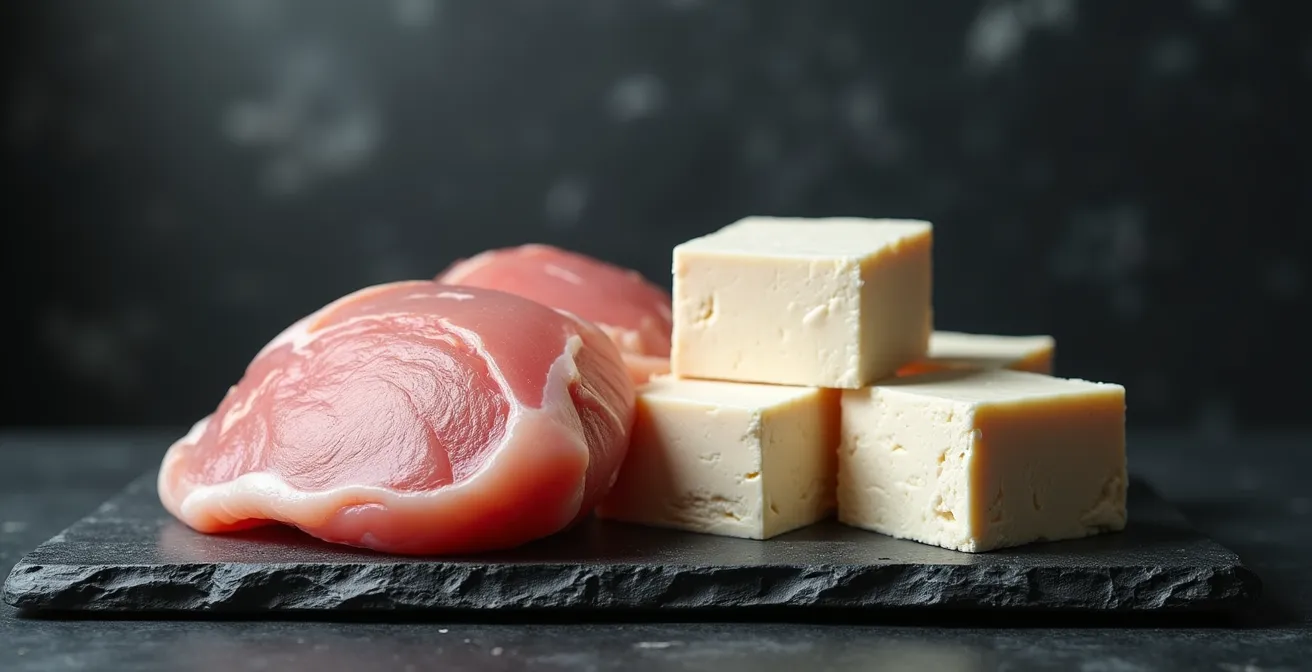
For building muscle, chicken breast triggers a slightly higher initial protein synthesis response, but the real key to long-term growth is overall daily protein intake and nutrient synergy, not just the source.
- Chicken provides more protein per gram, but tofu offers significant benefits like high calcium for bone health and isoflavones for cardiovascular support.
- The “anabolic window” is largely a myth; muscle protein synthesis remains elevated for over 24 hours post-workout, making total daily protein intake more critical than immediate timing.
Recommendation: Incorporate both chicken and tofu into your diet. Use chicken for maximum protein density on heavy training days and tofu for recovery, overall health benefits, and to ensure you consistently meet your daily protein targets.
For anyone serious about fitness, the protein debate is a constant. You stand in the grocery aisle, weighing your options: the classic, lean chicken breast or the plant-based powerhouse, tofu. The common wisdom is simple: chicken has more protein, so it must be better for building muscle. This logic drives countless meal preps, focusing solely on maximizing grams of protein as the ultimate measure of success. Many discussions stop there, comparing raw numbers without looking at the bigger picture of how our bodies actually use these nutrients.
But what if the question “which is better?” is flawed from the start? What if the true secret to building muscle and feeling full isn’t just about a single ingredient, but about understanding the deeper mechanisms of protein efficiency? The real difference lies not just in the quantity of protein, but in its bioavailability, its effect on satiety signaling hormones, and the synergistic nutrients that come with it. This conversation goes beyond a simple chicken versus tofu showdown and dives into the science of what makes a protein source truly effective for your body.
This article will reframe the debate. We will move beyond the surface-level comparison of protein grams to explore the nuanced impact of each source. We’ll analyze how they influence satiety, uncover the truth about protein timing for recovery, and evaluate their complete nutritional profiles to help you make the most strategic choice for your specific health and fitness goals. Get ready to understand not just *what* to eat, but *why* it works.
In this comprehensive analysis, we will deconstruct the roles of chicken and tofu in a performance-oriented diet. The following sections provide a detailed breakdown of everything from their impact on hunger cues to their long-term health benefits, giving you the knowledge to build a smarter, more effective nutrition plan.
Summary: A Deep Dive into Protein Sources for Muscle and Health
- Why Does a High-Protein Breakfast Stop Mid-Morning Snacking?
- How to Cook Chicken Breast That Actually Stays Juicy?
- Canned Tuna or Fresh Fish: Which Is Safer for Weekly Consumption?
- The Kidney Myth: Does High Protein Really Damage Your Organs?
- How Soon After a Workout Must You Eat Protein for Recovery?
- When Does Muscle Mass Naturally Start to Decrease?
- How to Calculate Your Protein Needs Based on Activity Level?
- Cardio vs Weights: Which Is More Effective for Long-Term Heart Health?
Why Does a High-Protein Breakfast Stop Mid-Morning Snacking?
The feeling of needing a snack by 10 AM is a common struggle, but a high-protein breakfast, whether from chicken, eggs, or tofu, provides a powerful solution. This effect goes beyond simply feeling “full.” It’s rooted in a complex hormonal process known as satiety signaling. When you consume protein, your digestive system releases hormones like Peptide YY (PYY) and Glucagon-like peptide-1 (GLP-1). These hormones send signals to your brain, reducing appetite and slowing down gastric emptying, which means food stays in your stomach longer, promoting a sustained feeling of fullness.
Furthermore, protein has the highest Thermic Effect of Food (TEF) among all macronutrients. This means your body burns more calories digesting protein compared to fats and carbohydrates. This slight metabolic boost contributes to better energy regulation throughout the morning. Unlike a carb-heavy breakfast like a pastry or sweetened cereal, which can cause a rapid spike and subsequent crash in blood sugar, a protein-rich meal provides a more stable source of energy.
Both chicken and tofu are effective at triggering these satiety mechanisms. While chicken might have a slight edge in pure protein content, tofu’s combination of protein and fiber also contributes significantly to fullness. The key takeaway is that starting your day with a substantial dose of protein helps regulate appetite-controlling hormones and stabilize blood sugar, effectively shutting down the urge for mid-morning, high-sugar snacks and setting a foundation for better food choices all day.
Ultimately, a high-protein breakfast arms you with the biological tools to maintain control over your hunger, making it a cornerstone of any effective diet for muscle gain or fat loss.
How to Cook Chicken Breast That Actually Stays Juicy?
The number one complaint about chicken breast is that it often ends up dry, tough, and flavorless. This happens because the muscle fibers in this lean cut of meat contract and squeeze out moisture when overcooked. The window between perfectly cooked and hopelessly dry is incredibly small. Fortunately, mastering a few science-based techniques can guarantee a juicy, tender result every time, preserving both its texture and its precious protein content.
One of the most effective methods is brining. Soaking the chicken breast in a simple saltwater solution before cooking dramatically increases its moisture content. The salt helps to dissolve some of the muscle proteins, which allows the meat to absorb more water and prevents it from contracting as aggressively during cooking. A second crucial factor is precise temperature control. Using a meat thermometer is non-negotiable. Pulling the chicken from the heat when its internal temperature reaches 150-155°F (65-68°C) and letting it rest allows carryover cooking to bring it to a safe 165°F (74°C) without turning it into leather.
For those seeking perfection, the sous vide method offers unparalleled control. By cooking the chicken in a vacuum-sealed bag in a precisely controlled water bath, you can hold it at the ideal final temperature, ensuring it’s both perfectly cooked and pasteurized without ever exceeding the threshold for dryness. This technique is a game-changer for preserving the delicate texture of lean protein.
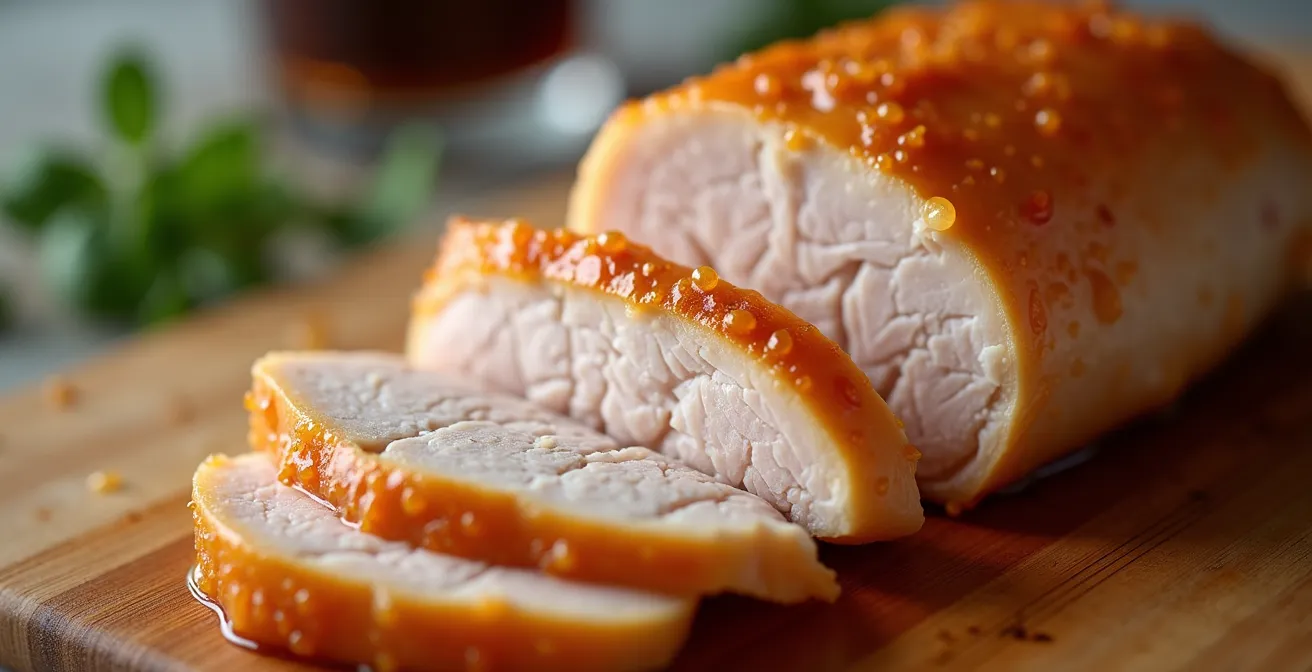
As the image above illustrates, a properly cooked chicken breast retains its moisture, resulting in a succulent texture where the protein fibers are clearly visible and not tough or stringy. This visual cue is the hallmark of a well-prepared, high-quality protein source that is enjoyable to eat.
Your Action Plan: Evidence-Based Techniques for Juicy Chicken Breast
- Brine the chicken breast in a 5% saltwater solution (50 grams of salt per 1 liter of water) for 30 to 60 minutes to maximize moisture retention.
- Cook with precision, aiming for an internal temperature of 146-150°F (63-65°C). Use a meat thermometer to remove it from the heat just before it’s done.
- Let the chicken rest for 5-10 minutes after cooking. This allows the juices to redistribute throughout the meat instead of spilling out when sliced.
- For ultimate control, consider cooking sous vide at 146°F (63.5°C). This pasteurizes the chicken while keeping it perfectly moist and tender.
- Sear the chicken in a hot pan for 30-60 seconds per side *after* cooking (especially after sous vide) to develop flavor and color without overcooking the interior.
By applying these principles, you can transform chicken breast from a dietary chore into a delicious, high-protein staple you’ll actually look forward to eating.
Canned Tuna or Fresh Fish: Which Is Safer for Weekly Consumption?
While the debate between canned tuna and fresh fish often centers on mercury levels and convenience, the underlying question for a fitness enthusiast is about protein quality and nutritional density. This same lens should be applied when comparing classic animal and plant-based staples like chicken and tofu. Moving beyond the fish aisle, the chicken vs. tofu matchup presents a fascinating case study in protein efficiency and overall nutritional value. It’s not just about which has more protein, but what else each brings to the table.
On the surface, the numbers seem to favor chicken. A comprehensive nutritional comparison reveals that chicken meat contains 27.3g of protein per 100g while tofu contains 17.3g. Both are considered “complete proteins,” meaning they provide all nine essential amino acids (EAAs) that the body cannot produce on its own and must obtain from food. These EAAs, particularly leucine, are the primary triggers for Muscle Protein Synthesis (MPS), the process of repairing and building muscle tissue.
However, the comparison becomes more nuanced when you look beyond protein. Tofu, for instance, contains significantly less saturated fat and zero cholesterol, making it a heart-friendly option. It is also packed with other micronutrients. For example, the same 100g serving of firm tofu can provide a substantial amount of calcium and iron, nutrients that are crucial for bone health and oxygen transport, respectively—both vital functions for any athlete. Chicken delivers high-quality protein, but tofu delivers a broader package of health benefits alongside its protein content.
Therefore, choosing between them isn’t a simple matter of a higher protein number. It requires a strategic assessment of your total dietary needs, from muscle repair to cardiovascular health and bone density.
The Kidney Myth: Does High Protein Really Damage Your Organs?
The persistent myth that high-protein diets harm healthy kidneys has been widely debunked by modern research. For individuals with normal kidney function, studies show that a high intake of protein, whether from animal or plant sources, does not cause organ damage. This concern originated from observations in patients with pre-existing kidney disease, for whom reducing protein intake can ease the strain. However, this recommendation does not apply to the general healthy, active population. Your kidneys are incredibly efficient at filtering the metabolic byproducts of protein digestion, like urea.
With that myth addressed, a more relevant question emerges: which protein source offers superior benefits for muscle growth? Here, the concept of protein bioavailability is key. While both chicken and tofu are complete proteins, the body’s response to them differs slightly. As a leading nutrition research team points out, the rate of muscle synthesis can vary.
Chicken meat and soy protein are rich in dietary proteins and lead to muscle synthesis and growth. However, soy proteins result in a lower muscle protein synthetic response.
– Food Structure Research Team, Food Structure Nutrition Comparison Study
This suggests that gram for gram, the amino acids from chicken may trigger a slightly more robust initial muscle-building signal. This is often attributed to chicken’s higher concentration of the key amino acid leucine. However, this doesn’t render tofu ineffective. It simply means a slightly larger portion of tofu may be needed to achieve the same peak MPS response as a serving of chicken. For most people, this difference is marginal and easily compensated for by ensuring total daily protein goals are met.
Ultimately, the choice is less about fearing protein and more about understanding these subtle differences in anabolic potential to optimize your intake based on your goals and dietary preferences.
How Soon After a Workout Must You Eat Protein for Recovery?
For decades, gym culture has been dominated by the concept of the “anabolic window”—the belief that you must consume protein within a tight 30-to-60-minute window post-workout to maximize muscle growth. This idea created a frantic rush to chug a protein shake immediately after the last rep. However, recent scientific evidence has largely dismantled this myth, shifting the focus from frantic timing to consistent total intake. The real anabolic window is much wider than we thought.
The process of Muscle Protein Synthesis (MPS), the driver of muscle repair and growth, doesn’t just last for an hour. In fact, MPS remains elevated for at least 24 to 36 hours after a strenuous workout. While it does spike shortly after exercise, studies show it can be up by 50% after 4 hours and still be elevated by over 100% a full 24 hours later. This extended duration means your body is primed to use protein for repair long after you’ve left the gym.

As leading experts in the field of fitness and nutrition confirm, the emphasis should be on the bigger picture. The total amount of protein you consume over the course of a day is far more important than the exact minute you consume it after training.
The belief that protein must be consumed within 30 minutes to 2 hours after exercise to maximize muscle growth is no longer supported by evidence. Muscle protein synthesis stays elevated for up to 24 hours after exercise. The key isn’t the timing—it’s ensuring your total daily protein intake is high enough.
– Dr. Rhonda Patrick, Twitter/X post on protein timing research
This paradigm shift is liberating. It means you don’t need to stress about slamming a shake. You can go home, cook a proper meal of chicken or tofu, and still provide your muscles with everything they need for optimal recovery and growth. The focus should be on hitting your daily protein target, distributed reasonably throughout the day, to continually feed the anabolic duration of your muscles.
So, relax. Your muscles aren’t going to vanish if you don’t eat immediately. Focus on quality, consistency, and total daily intake.
When Does Muscle Mass Naturally Start to Decrease?
The natural decline of muscle mass, a condition known as sarcopenia, typically begins around the age of 30 and accelerates after 50. This gradual loss of muscle tissue and strength is a natural part of aging, but its rate can be significantly slowed with proper nutrition and resistance training. A key nutritional strategy is maintaining a consistently high protein intake to continuously stimulate muscle protein synthesis and counteract the catabolic (breakdown) processes that become more dominant with age.
In this context, the choice between chicken and tofu takes on a new dimension: nutrient synergy. While both provide the essential amino acids for muscle maintenance, tofu offers an additional, powerful benefit for an aging population: bone health. Sarcopenia is often accompanied by a higher risk of osteoporosis (bone density loss). Tofu, especially calcium-set varieties, is an exceptional source of dietary calcium. Nutritional analysis shows that calcium-set tofu can contain approximately 350mg of calcium per 100g, rivaling or even exceeding many dairy products. This makes it a dual-action food, supporting both muscle and skeletal integrity simultaneously.
Furthermore, concerns about the quality of plant protein are often overstated. Modern scoring systems confirm tofu’s effectiveness.
Case Study: Tofu’s High-Quality Protein Score
The Protein Digestibility-Corrected Amino Acid Score (PDCAAS) is a measure of a protein’s quality based on its amino acid profile and digestibility. Tofu scores between 0.9 and 1.0, the highest possible score. This means it is considered a high-quality protein, nearly equivalent to animal proteins like chicken and casein in its ability to provide the essential amino acids the body needs for functions like muscle maintenance and immune support. Per 100g, firm tofu provides key amino acids like leucine (1.2g) and lysine (1.0g), effectively supporting the body’s needs.
While chicken remains an excellent source of pure protein, tofu’s impressive profile of protein, calcium, and other minerals makes it a uniquely strategic choice for long-term health and the fight against age-related muscle loss.
How to Calculate Your Protein Needs Based on Activity Level?
Determining your daily protein requirement isn’t a one-size-fits-all formula; it depends heavily on your activity level, goals, and even your caloric intake. The generic recommendation of 0.8 grams of protein per kilogram of body weight is for sedentary individuals. For active people looking to build or maintain muscle, that number is significantly higher. Most sports nutrition bodies recommend a range of 1.6 to 2.2 grams of protein per kilogram of body weight (or about 0.7 to 1.0 grams per pound).
If your goal is fat loss while preserving muscle, your protein needs may be even higher. During a caloric deficit, the body is more likely to break down muscle tissue for energy, and a higher protein intake helps prevent this. A recent study underscores the powerful effect of an adequate protein dose. A 2023 study published in a leading medical journal found that a 30g dose of protein more than doubled muscle protein synthesis rates within four hours and kept them elevated for a full day. This highlights the importance of consuming sufficient protein not just daily, but in each meal.
This is where understanding the macronutrient profiles of foods like chicken and tofu becomes practical. To hit a 30g protein target, you would need about 100g of chicken breast, but closer to 250g of firm tofu. This is where a direct comparison is useful.
| Nutrient | Chicken Breast | Firm Tofu | Difference |
|---|---|---|---|
| Calories | 165 | 144 | Chicken has 15% more |
| Protein | 31g | 8.1g | Chicken has 284% more protein |
| Calcium | 15mg | 350mg | Tofu has 22 times more calcium |
This table, based on data from detailed nutritional analysis, clearly shows the trade-offs. Chicken offers a massive protein density, making it highly efficient for hitting high protein targets with fewer calories. Tofu offers less protein per gram but shines with its incredible calcium content and lower calorie count.
A smart approach involves using both: chicken when you need a potent, high-density protein source, and tofu when you want a nutrient-rich, lower-calorie option to round out your daily intake.
Key Takeaways
- Chicken Wins on Protein Density: Gram for gram, chicken breast offers significantly more protein than tofu, making it a highly efficient choice for hitting high daily targets.
- Tofu Excels in Nutrient Synergy: Tofu provides a broader range of benefits, including high calcium for bone health, zero cholesterol, and isoflavones linked to cardiovascular protection.
- Timing is Secondary to Total Intake: The “anabolic window” is a myth. Muscle protein synthesis remains elevated for 24+ hours post-workout, making your total daily protein consumption the most critical factor for growth.
Cardio vs Weights: Which Is More Effective for Long-Term Heart Health?
The long-standing debate between cardio and weight training for heart health is settling on a clear consensus: the best approach is a combination of both. While cardiovascular exercise strengthens the heart muscle itself and improves circulation, resistance training improves body composition, reduces blood pressure, and enhances insulin sensitivity—all major factors in preventing heart disease. Your choice of protein can play a supporting role in this holistic approach, particularly when considering the unique benefits of plant-based sources like tofu.
While chicken is a fantastic lean protein for fueling muscle repair after weightlifting, tofu brings a unique set of properties that directly support cardiovascular wellness. This makes it an excellent component of a diet designed for long-term heart health. The benefits extend far beyond just being low in saturated fat.
Tofu boasts more fiber, calcium, iron, magnesium, zinc and folate than chicken. Plus, it contains isoflavones known to give off antioxidant effects that stamp out free radicals and prevent premature aging. Studies suggest regularly eating soy-based products can prevent breast cancer, osteoporosis and cardiovascular disease.
– ClassPass Blog Research Team, Is Tofu or Poultry Better For You?
These isoflavones are particularly noteworthy. They are powerful plant-based compounds that have been shown to help improve the elasticity of blood vessels and lower levels of “bad” LDL cholesterol. By incorporating tofu into a diet that also includes lean animal proteins like chicken, you are not just building muscle; you are actively consuming ingredients that protect your cardiovascular system. This embodies the concept of a “protein efficiency score”—evaluating a food not just on its protein content, but on its total contribution to your health goals.
Therefore, the smartest diet for an active individual includes both. Use chicken to fuel intense training and muscle growth, and integrate tofu to leverage its unique portfolio of heart-protective nutrients, creating a powerful synergy for a strong body and a healthy heart.