Arts & Culture
Culture is not static. It evolves through a constant dialogue between innovation and tradition, between what emerges and what endures. From the fleeting micro-trends that capture collective attention for mere weeks to the centuries-old traditions we fight to preserve, the cultural landscape reflects our values, anxieties, and aspirations. Understanding these dynamics—how trends form and fade, why preservation matters, what shapes our identity, and how creativity transforms communities—is essential for anyone seeking to navigate or contribute to this complex ecosystem.
This exploration examines four interconnected dimensions of contemporary culture: the accelerating lifecycle of cultural trends, the urgent need for heritage preservation in an increasingly digital world, the ways individuals connect with cultural and personal identity, and the transformative power of arts-driven urban development. Each dimension reveals critical insights about how we create, consume, and conserve culture in an era of unprecedented change.
Understanding Cultural Trends and Their Lifecycles
Cultural trends operate on wildly different timescales than they did even a generation ago. What once took months or years to spread now achieves global saturation in days, creating a phenomenon known as micro-trends—cultural moments that burn intensely bright before disappearing almost completely.
The Acceleration of Trend Cycles
Digital platforms have fundamentally altered how cultural phenomena spread. A particular aesthetic, phrase, or creative format can achieve millions of impressions within hours, creating the illusion of mainstream adoption. However, this velocity comes with a cost: saturation happens so quickly that audiences tire of trends before they’ve fully developed. Think of it like a forest fire versus a slow-burning hearth—one consumes everything rapidly and moves on, while the other provides sustained warmth.
This acceleration affects creators, businesses, and cultural institutions differently. For content creators, the pressure to constantly generate novel material can lead to creative burnout. For brands, jumping on trends too early or too late carries reputational and financial risks. The key lies in developing methodologies for spotting emerging patterns before they peak, analyzing signals from niche communities where innovation often originates before spreading to mainstream audiences.
Distinguishing Fads from Meaningful Trends
Not every viral moment deserves investment. A genuine trend typically exhibits three characteristics:
- Depth: It addresses an underlying human need or solves a real problem, not just surface-level novelty
- Adaptability: Different communities reinterpret it in contextually relevant ways rather than merely copying
- Staying power: Interest sustains or grows over weeks and months, with evolving iterations rather than immediate decline
A fad, by contrast, generates excitement through novelty alone. It spreads through mimicry rather than meaningful adaptation, and participants lose interest the moment something newer appears. Understanding this distinction helps avoid the significant risks of chasing every trend—from diluting brand identity to wasting resources on ephemeral moments that won’t generate lasting value.
Strategic Timing in Trend Adoption
The most successful cultural participants master timing. Early adopters gain credibility and visibility but risk investing in patterns that never achieve broader resonance. Late adopters benefit from proven concepts but enter oversaturated markets where differentiation becomes difficult. The optimal window typically lies in the early growth phase—after niche validation but before mainstream saturation—though this window has compressed considerably in the digital era.
Why Cultural Preservation Matters in the Digital Era
While some aspects of culture race forward, others risk disappearing entirely. The digitization of daily life creates a paradox: we generate more cultural artifacts than ever before, yet certain forms of knowledge and practice face unprecedented vulnerability.
Safeguarding Tangible and Intangible Heritage
Cultural legacy exists in two distinct forms. Tangible heritage—physical objects, buildings, artworks—faces threats from environmental degradation, conflict, and neglect. Professional restoration techniques can address many of these challenges, from climate-controlled storage to specialized conservation methods that stabilize deteriorating materials.
More precarious is intangible cultural heritage: traditional practices, oral histories, craft techniques, and performance traditions that exist primarily in human memory and practice. When the last practitioner of a traditional art form passes without transmitting their knowledge, that cultural thread breaks permanently. This risk of intangible loss represents one of the most urgent challenges facing cultural stewards.
The Psychology of Physical Experience
Digital archives serve invaluable preservation functions, yet they cannot fully replace tactile engagement with cultural objects. Research consistently demonstrates that physical interaction with cultural artifacts creates deeper cognitive and emotional connections than screen-based experiences. Holding a centuries-old tool, standing in a historic space, or witnessing a live performance activates multisensory processing that enhances memory formation and emotional resonance.
This reality doesn’t diminish digital preservation’s importance—it instead highlights the need for complementary approaches. Virtual archives ensure accessibility and backup, while maintained physical collections provide irreplaceable experiential opportunities.
Institutions and Community Spaces
The question of where preservation happens matters enormously. Traditional museums offer professional curation, climate control, and scholarly expertise, but can feel distant from the communities whose heritage they preserve. Community cultural centers, by contrast, maintain living connections between heritage and daily life, though they often lack resources for professional conservation.
The most effective preservation ecosystems combine both approaches: professional institutions provide conservation expertise and long-term stability, while community spaces ensure cultural practices remain active and relevant rather than frozen in time. Timing preservation efforts appropriately—before practices disappear but while practitioners can still transmit knowledge—requires constant vigilance and relationship-building with cultural communities.
Exploring Personal and Collective Cultural Identity
Culture isn’t just something we observe—it’s something we inhabit and embody. For many individuals, exploring cultural heritage provides a framework for understanding their place in broader historical narratives and contemporary communities.
Connecting with Ancestry and Heritage
The desire to understand one’s roots reflects a fundamental human need for belonging and continuity. Genealogical research reveals family connections, but cultural identity encompasses more than bloodlines. It includes the traditions practiced, languages spoken, foods prepared, and values transmitted across generations—elements that shape worldview and daily experience.
This exploration carries particular significance for individuals from diasporic communities, adoptees, or those whose family histories include displacement or migration. Reconstructing cultural connections can profoundly impact self-worth and belonging, providing narrative coherence to personal experience.
Methods for Documenting Family and Community History
Oral history represents one of humanity’s oldest knowledge transmission methods, yet it faces inherent limitations. Memory proves fallible, perspectives shift over time, and opportunities to record elders’ experiences close permanently at death. Effective interviewing techniques can maximize what’s preserved:
- Prepare open-ended questions that invite storytelling rather than yes/no responses
- Record in multiple formats (audio, video, written notes) to capture verbal and non-verbal communication
- Conduct multiple sessions rather than attempting to capture everything at once
- Create comfortable, private settings where subjects feel safe sharing sensitive memories
- Ask about sensory details, emotions, and everyday life, not just major events
The urgency of documentation cannot be overstated. Every generation that passes takes irreplaceable firsthand knowledge with it. While genetic testing services now offer insights into ancestry composition, this DNA data reveals heritage percentages but cannot convey the lived experience of cultural practice—the recipes, stories, songs, and wisdom that transform genetic connection into meaningful cultural identity.
Culture as a Catalyst for Urban Revitalization
Arts and culture don’t just reflect communities—they actively reshape them. In neighborhoods worldwide, creative economies drive economic development, social cohesion, and urban transformation, though not without complications.
The Creative Economy’s Transformative Power
When artists, galleries, performance spaces, and craft businesses establish themselves in underutilized urban areas, they often trigger broader economic activity. Studios become galleries, galleries attract cafes, cafes draw foot traffic, and property values shift upward. This process, often called arts-led regeneration, can revitalize neglected neighborhoods, create employment, and establish distinctive community identities.
Supporting local artisans within this ecosystem generates multiple benefits. It preserves traditional skills, provides sustainable livelihoods, creates unique offerings that distinguish places from generic commercial districts, and often emphasizes environmentally conscious production methods that contrast with mass manufacturing.
Navigating the Risks of Cultural Gentrification
The same forces that revitalize can also displace. As creative activity increases property values and attracts investment, original residents—including the artists who initiated transformation—often face rising rents they cannot afford. This risk of displacement represents one of the most troubling aspects of arts-driven development.
The tension between creative hubs and commercial zones illustrates this challenge. Artist-led spaces prioritize experimentation, community access, and affordable production space. Commercial development prioritizes revenue generation, typically leading to higher rents, standardized retail, and exclusion of lower-income participants. Without deliberate intervention, creative hubs frequently evolve into commercial zones that price out the very communities that created their cultural appeal.
Long-term Planning for Sustainable Cultural Development
Preventing displacement while maintaining creative vitality requires proactive strategies. Successful approaches often include securing permanent affordable workspace through community land trusts, implementing commercial rent stabilization, requiring mixed-income development, and ensuring community voices shape planning decisions rather than merely reacting to developer proposals.
The timing of these interventions proves critical. Once property speculation accelerates and displacement begins, reversing these dynamics becomes exponentially harder. Communities that plan for cultural sustainability from the beginning—before significant property value increases—create more resilient creative ecosystems that benefit diverse participants rather than only those who can afford rising costs.
Culture shapes and is shaped by the choices individuals and communities make—which trends to embrace, which heritage to preserve, which stories to record, and which development models to pursue. By understanding these dynamics with greater sophistication, we become more conscious participants in cultural creation rather than passive consumers of whatever emerges. The goal is not to control cultural evolution, which remains beautifully unpredictable, but to engage with it more thoughtfully, ensuring that innovation and preservation, individual expression and collective memory, economic vitality and community stability can coexist in productive tension.
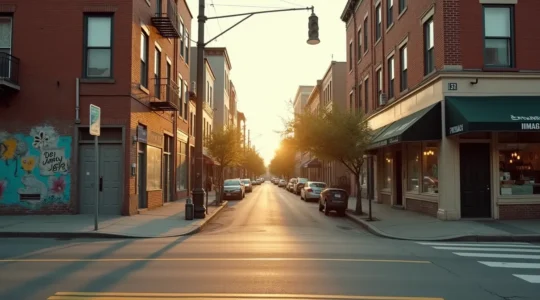
Gentrification vs. Revitalization: Decoding the Economic Engine of Art Districts
The influx of art into a neighborhood isn’t just a cultural shift; it’s a primary economic indicator that predicts and accelerates gentrification. Street art acts as a market signal for investors, correlating strongly with rent hikes and the eventual displacement…
Read more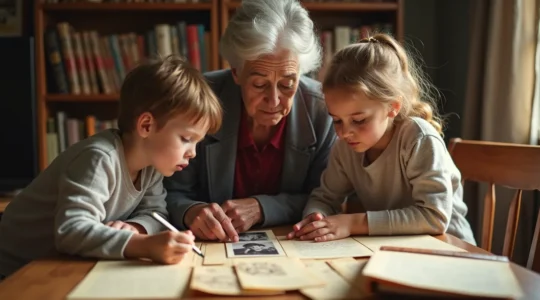
How to Trace Your Ancestry Beyond Online DNA Tests?
Contrary to popular belief, a DNA test isn’t the end of your ancestry journey—it’s the beginning of a deeper investigation. True heritage isn’t found in genetic percentages, but in the rich, complex, and often contradictory stories that define your family….
Read more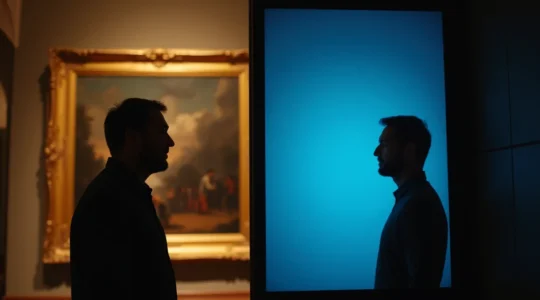
Why Does Digital Archiving Fail to Capture the “Aura” of Physical Art?
Contrary to the belief that an artwork’s “aura” is lost in digital copies simply due to a lack of originality, the true deficit lies deeper. This exploration reveals that an object’s aura stems from its “temporal thickness”—the accumulated, tangible history…
Read more
Why Do Internet Micro-Trends Disappear Faster Than Traditional Fashion Cycles?
The rapid death of internet micro-trends is not just about algorithms; it’s a structural shift where nostalgia is commodified and organic subcultures are replaced by disposable, searchable “-core” aesthetics. The classic 20-year nostalgia cycle has collapsed, with trend velocity accelerating…
Read more